Trevally on the Jig: Estuary and Reef Technique

Quick summary
Silver trevally stage in estuary mouths and channel edges in winter, stacking wherever current accelerates past structure - bridge pylons, rock walls, wharf piles and the seaward edge of sand flats.
A 7-gram to 14-gram metal slug or vibe fished with a snapping rod action through the current seam will do more damage than any bait presentation once fish are located.
The how-to
After reading this, you will be able to identify a productive trevally location from the tide chart alone, rig correctly, and work a jig through the key zone with a retrieve that triggers strikes rather than follows.
Trevally are ambush feeders that do not wait for bait to come to them - they position in current that does the delivery work, and they are extremely efficient at it.
Most estuary anglers walk past schooled fish every session because they cast to flat water rather than to the seam where fast current meets slower water alongside structure.
That seam is where every productive trevally session begins.
Entry point: what you should already be comfortable doing
This guide assumes you can cast a 7-gram lure accurately to 25 metres and work a soft plastic jig head with a rod tip action rather than a winding retrieve.
If you are new to lure fishing entirely, start with bream or whiting on soft plastics, then return to trevally - they are fast, aggressive and unforgiving of a slack line.
Trevally fight in current, which means they find every weakness in your gear setup within the first five seconds.
Gear: what works, what breaks
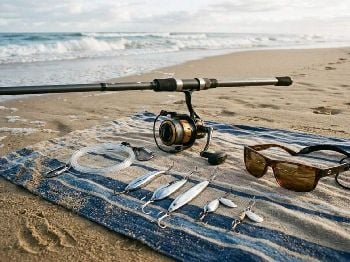
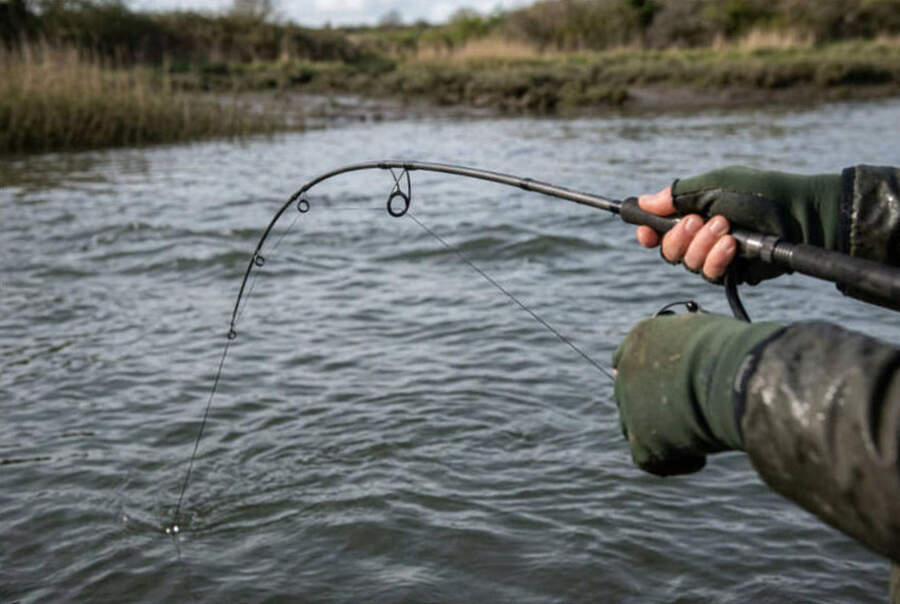
A 7-foot rod in the 2 to 5 kilo class is the baseline - long enough to mend line across a current seam, light enough to feel a hit through the jig on the drop.
Pair it with a 2500-size reel spooled with 10-pound braid, then a leader of 12 to 15-pound fluorocarbon at 1.5 to 2 metres.
The leader length matters more than most estuary anglers realise: shorter than 1.2 metres and trevally will roll and cut it on the leader-braid junction; longer than 2 metres and it comes off the spool unevenly through the guides on long casts.
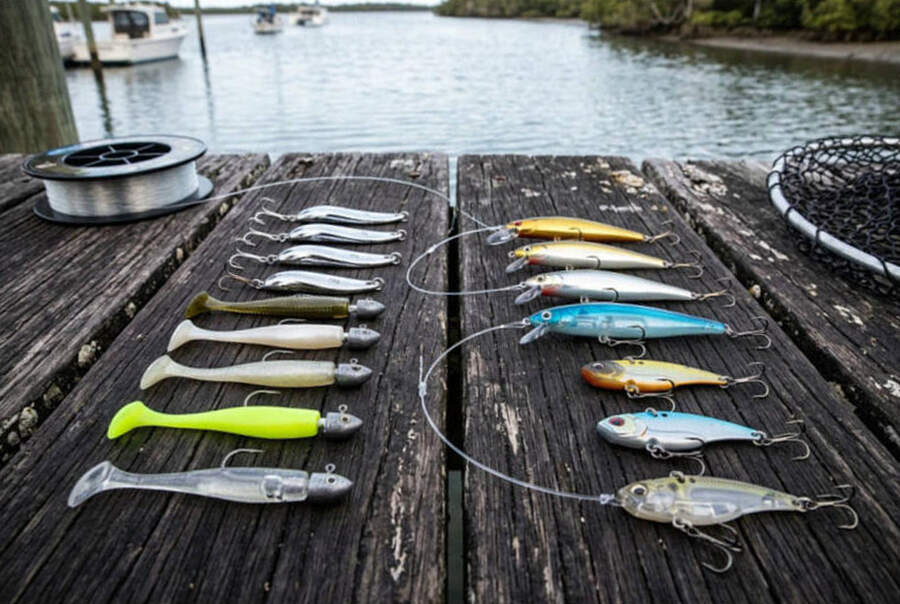
For jig heads, carry a selection: 1/6, 1/4 and 3/8 ounce (approximately 3g, 4.5g, and 10g) in size 2/0 hooks.
The right weight is the one that keeps contact with the bottom or structure at the speed the current is running - if you cannot feel the weight lifting and dropping, go heavier.
Metal slugs from 7 grams to 18 grams are the first-choice search tool when the school is not pinpointed.
Cast across the current, allow the slug to sink into the zone and retrieve with sharp upward rod strokes of 30 to 40 centimetres at one stroke per second, with a half-turn of the reel on the drop to maintain tension.
Reading the estuary mouth: finding the zone
The productive zone is never the entire channel - it is a seam roughly two to four metres wide where the current acceleration shears against a slower water body.
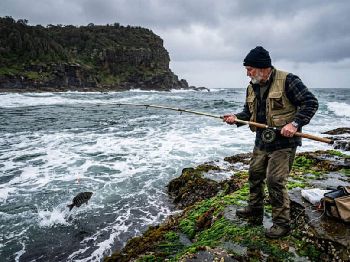
Incoming tide: look at the downstream face of any pylon, rock wall, or bridge abutment where the water pushes through and fans out behind the structure.
Outgoing tide: the current reverses and the productive zone shifts to the upstream face and the eddies that form on the inside of channel bends.
Silver trevally in southern Australian estuaries - Port Phillip Bay, Western Port, the Gippsland Lakes system, Gulf St Vincent - hold in these eddies and make short, fast interceptions into the current seam and back.
Cast past the structure, let the jig drop through the seam on the drift, and your first hit will almost always come at the inflection point where the current slows - not at the bottom.
Bridge pylons at estuary mouths are the most reliable structure because current velocity increases as the channel narrows under the bridge deck, which concentrates bait and predators in a predictable holding position.
Jig technique: the retrieve that triggers strikes
The default mistake is a straight retrieve at a constant pace, which produces follows without hits.
Trevally are triggered by the hesitation - the moment the lure pauses or drops its speed and appears vulnerable.
The productive retrieve is a snap-pause: a sharp upward rod lift of 30 centimetres, rod back down quickly to create slack line, then a full stop for a count of two before the next snap.
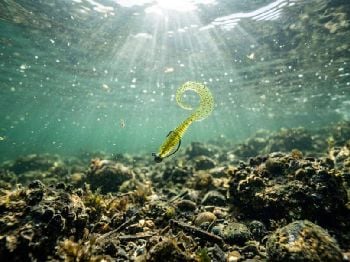
On the pause, the lure flutters down in the current - this is when the hit comes.
The wrong sensation is a steady thump as you wind - that means the lure is rolling rather than darting, which silver trevally will follow but rarely commit to.
The right sensation is irregular: rod tip loads on the upstroke, then light tension on the drop, then nothing for the count, then the line goes solid.
When fishing vibes (metal or plastic blades), keep the rod at 45 degrees and work a lift-and-drop with a slower sink rate, targeting fish that are holding at mid-water rather than on the bottom.
Trevally will suspension-feed on a vibe at 1 to 2 metres below the surface in clear water, particularly at dawn when baitfish are still near the top.
Tidal and lunar windows
The run-in tide is the best session window across all southern estuary systems - the final two hours of the incoming and the first hour of the high slack, when bait schools are pushed deepest into the estuary and trevally are stacked behind structure at estuary mouths.
The run-out has productive periods too, specifically the first two hours of the ebb when bait is flushed back through the mouths.
Full and new moon tides are the priority sessions.
The larger tidal range increases current velocity through channel pinch points significantly compared to neap tides, which concentrates fish in predictable zones and triggers more aggressive feeding.
Plan your sessions around the spring tide cycle and you will encounter trevally on a regular schedule rather than by chance.
Check the tidal curve for your system at Seabreeze tides - look for days where the tidal range exceeds 0.8 metres in southern bays and 1.2 metres in more exposed estuary systems.
Common mistakes and fixes
Casting to flat water beside the channel rather than into the current seam: walk the bank slowly and watch the surface for bait scattering, then cast up-current of the disturbance so your lure enters the seam on the drift.
Using too light a jig head in current: if the lure is not holding bottom on the pause, go heavier by one increment - maintaining contact with the seabed in the strike zone matters more than staying at a fixed depth.
Setting the hook too early: trevally hit and turn, which means the line goes solid half a second after the initial tap. Strike on the run rather than the tap.
Using a drag set too tight: silver trevally in current can run 30 metres on the first run from a 35-centimetre fish. Set the drag to 30 percent of breaking strain and let the reel do the work.
Bag and size limits vary by state - Victoria sets a minimum size of 20 centimetres for silver trevally with a bag limit of 20 fish, while South Australia has its own size and bag limits. Check the Victorian Fisheries Authority or PIRSA for current regulations before you fish.
Questions from estuary anglers
Does water clarity affect success? Yes. In gin-clear winter conditions, drop to 10-pound fluorocarbon leader and smaller lures - 7-gram slugs and size 1 jig heads. Trevally can see leader in clear water and will shy off anything heavier than 12-pound in bright sunlight.
Do trevally school with other species? Frequently. In Gippsland and Port Phillip, silver trevally and Australian salmon school together at estuary mouths on the run-out tide. If you are getting short strikes and follows, lengthen your leader - the fish are spooked by braid and you are reaching salmon rather than trevally.
What about night fishing? Trevally will feed after dark around lit structures - jetty lights attract bait, and trevally feed aggressively underneath. Use a floating vibe or surface popper rather than a jig and expect the hits to be violent.
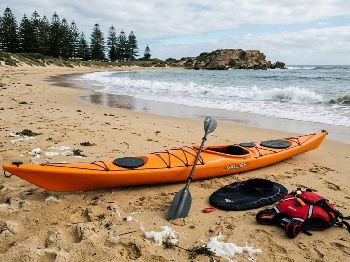
Can you target trevally from a kayak? Yes, and it is highly effective. Position the kayak up-current of a channel marker or pylon and drift through the seam, casting parallel to the structure rather than across it. You are inside the zone rather than casting into it, which changes the lure presentation angle significantly in your favour.