Bream at Night: Lights, Tides and the Right Lure

Quick summary
Bream feed most aggressively at night during the 90-minute window centred on a tidal change - rising tide over shallow sand or falling tide across weed beds produces the most consistent action.
Artificial lights concentrate baitfish and draw bream in from surrounding dark water - but the fish sit on the shadow edge, not in the lit zone. Cast into the light and retrieve into the dark.
The how-to
After reading this, you can plan a night session around tides, identify the productive light sources in your estuary, and set up the right leader and lure for after-dark bream.
Bream fishing changes completely at night. The fish that spent the day buried in snags or holding tight to deep structure move into open, shallow areas and feed with far less caution.
Most anglers know bream are a night feeder - but knowing it and fishing it well are different things.
The difference is understanding two things: when the window opens, and where the fish position when it does.
The entry point: what you should already know
This article assumes you can catch bream during the day on lures or bait and have a basic understanding of estuary structure - where the channels run, where the shallow flats sit, and where the weed beds and oyster racks are.
If you are still learning to locate bream in daylight, do that first.
Night fishing amplifies what you already know about the water - it does not replace that knowledge.
How the night shift works
During daylight, bream use structure for two reasons: cover from predators above, and ambush positions for prey.
At night, the predator pressure from birds disappears, and the darkness itself provides cover.
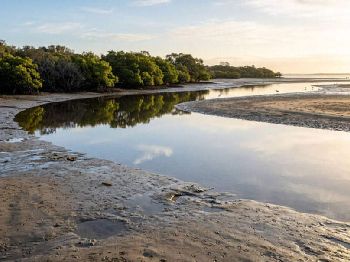
Bream respond by moving into areas they avoid during the day: shallow sandy flats, the edge of sand and weed, open gravel bars, and the shallows behind exposed sandbanks.
These areas become productive feeding grounds for the 90 minutes either side of a tidal change, particularly on a rising tide pushing over a flat that was dry or very shallow at low water.
The reason is mechanics: a rising tide pushes baitfish, prawns and nippers from the deeper fringe onto the flat as cover becomes available.
Bream move in just behind the leading edge of that tide, feeding at the boundary where depth transitions from ankle-deep to knee-deep water.
Reading tides for your two-hour window
Not all tidal changes are equal.
A rising tide after a very low run of tide produces the best flat-fishing action - there is more water movement, more baitfish displacement, and more compressed feeding activity.
A neap tide change (small range between high and low) produces less baitfish movement and softer feeding activity on the same flat.
Check the tidal range, not just the timing.
You want a minimum 0.5-metre range between the low and the first hour of rising water if you are targeting bream on open flats.
On falling tides, the best window is the last 45 minutes of the run as water accelerates off the flat - bream hold at the drop-off between the flat and the deeper channel, feeding on anything swept past them by the current.
"The fish are almost always at the tidal boundary. If the flat has water on it, they are feeding on it. When it gets too shallow, they drop back to the edge and wait for the next cycle."
That behaviour - sitting the boundary between depth and the flat - means the most productive casts are parallel to the shoreline or weed edge, not cast directly at the bank.
Artificial lights: what actually happens
Bridge lights, marina lights, and wharf lights concentrate zooplankton on the surface.
Zooplankton draws small baitfish - mullet, herring, whitebait.
The baitfish attract bream and other predators from the surrounding dark water.
The bream do not sit under the light - they sit at the edge of the illuminated zone, in the dark water, watching the lit area for disoriented bait.
This is the mistake most night-fishers make: casting into the lit water and retrieving toward the boat.
The productive retrieve runs from the lit zone into the darkness - following the same path the bream are watching.
Cast your lure into the pool of light, let it settle briefly, then retrieve slowly into the shadow edge and hold it there for three to five seconds before moving it again.
Most strikes come at the moment the lure crosses from light into dark, or during that pause in the shadow zone.
According to Tackle Tactics, a specialist Australian fishing education and tackle brand, this retrieve direction - light to dark - is the single most common adjustment that improves strike rates for anglers new to bridge fishing at night.
Lure selection by light condition
Lure choice at night breaks down by ambient light level and water depth around the structure.
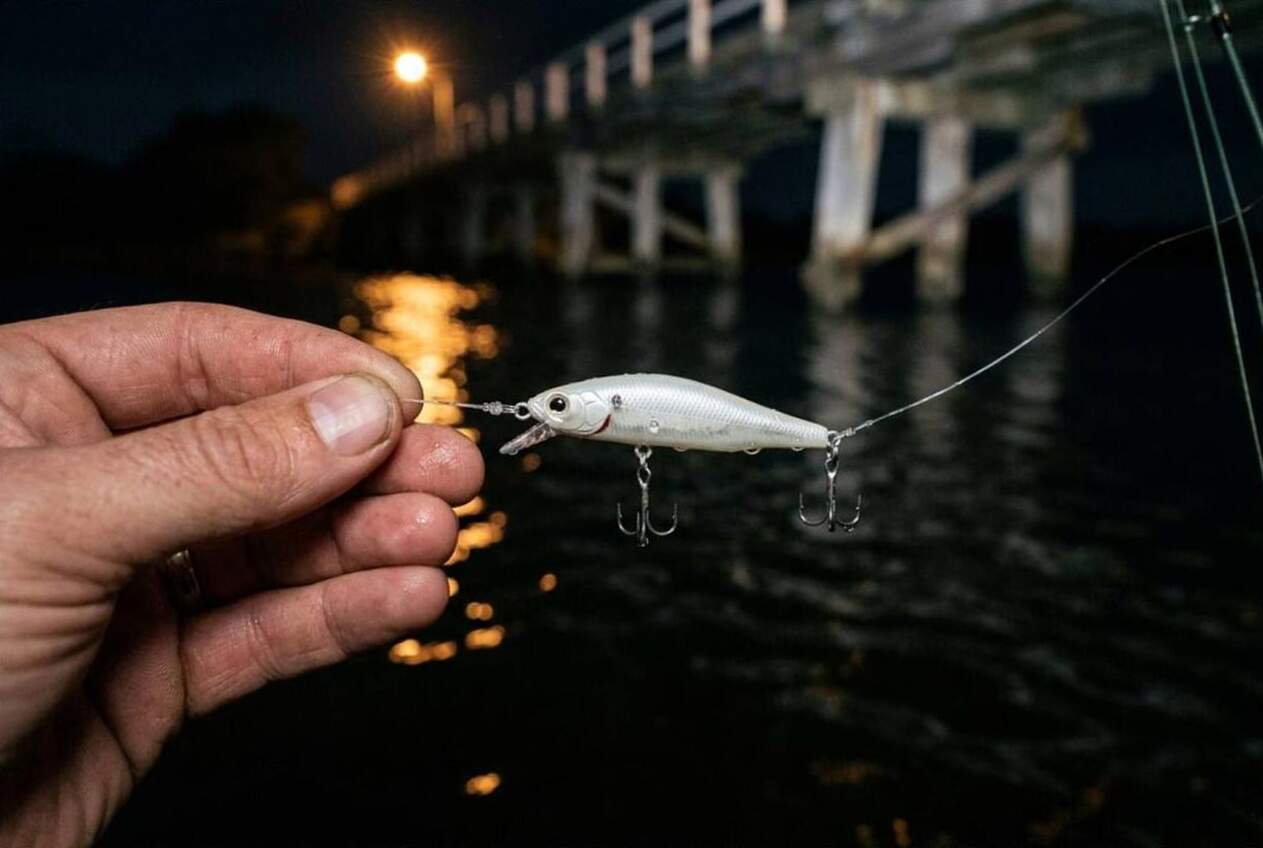
In well-lit areas (bridge pools, marina berths), small hard-bodied minnows in natural baitfish colours - pearl white, clear with silver flash, chartreuse - work because bream can see the lure profile clearly in the lit zone.
Sizes from 50mm to 75mm match the mullet and herring fry that are most common around lights in Australian estuaries.
Bibbed minnows that dive to 0.5 to 1 metre keep the lure in the feeding zone when bream are suspended up in the water column, which they commonly are at night.
On unlit flats and channels, soft plastics with scent are more reliable than hard-bodies because bream locate prey partly by lateral line vibration in low-visibility conditions.
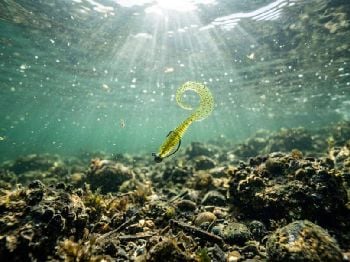
Paddle-tail plastics on 1/16 to 1/8 oz jig heads produce a consistent pulse that bream can track from several metres in murky or dark water.
Dark or UV-reactive colours - black, purple, dark olive - show up better in low-light conditions than the natural baitfish patterns that work under bridge lights.
Surface lures, including small poppers and walk-the-dog style stickbaits, produce spectacular surface strikes from bream at night when fished over shallow flats.
Bream feeding on the flat at night are in the top 30 centimetres of the water column - a surface lure is directly in their strike zone with no descent time required.
Sizes from 45mm to 65mm are most practical for bream.
Leader setup for night bream
The standard advice - bream are leader-shy, go light - applies differently at night.
In well-lit areas around bridge pylons and structure, bream are cautious about line even in low light.
Use 4 lb to 6 lb fluorocarbon in clear or lightly stained water near lit structure.
On dark, open flats with no artificial light, you can step up to 8 lb to 10 lb fluorocarbon without noticeably reducing strike rate - the fish have more cover and less line-of-sight to the trace.
Around bridge pylons and rock walls, abrasion resistance matters as much as diameter: bream that get their head down on a pylon base will cut through 4 lb mono quickly.
Fluorocarbon over mono is not optional for structure fishing at night - the abrasion resistance of fluorocarbon is significantly better than mono at equivalent breaking strains.
Leader length of 1.5 to 2 metres is standard for night bream on braided mainline.
Common mistakes and what they feel like
Casting into the dark, retrieving toward the light. You will get follows, missed strikes, and fish that take the lure and immediately spit it - they are tracking from the shadow side and reacting when the lure reaches light.
Fishing too deep. Night bream suspend far higher in the water column than daylight bream - a lure running the bottom on a 1/4 oz jig head is running under the fish. Halve your jig head weight compared to your typical daytime setup.
Fishing the wrong tidal stage. A slack tide with no movement produces almost nothing on open flats and is marginal around structure. If you arrive on the flat at dead low and there is no water moving, wait - the feeding window opens as flow resumes.
Using too heavy a leader near lights. Bream under bridge lights in clear water spook from 10 lb mono traces the same way they do in daylight. The darkness helps you - the lit zone does not.
Over-fishing a location after it goes quiet. Bream on a flat clear it quickly once feeding starts - 30 to 45 minutes of action, then silence. Move along the flat or to the next tidal boundary rather than waiting for the same spot to fire again.
Safety and practical notes
Night fishing from a boat requires navigation lights to be on at all times when under way.
Anchoring or drifting without lights in a tidal estuary with other vessel traffic is a serious collision risk.
When wading flats at night, use a headlamp for mobility but shield it when approaching your fishing position - bream on a shallow flat will flush at a bright light sweeping the water.
Wear a lifejacket when wading unfamiliar estuaries at night: depth changes that are obvious in daylight are invisible in the dark.
Bag limits
In New South Wales, the recreational bag limit for bream and tarwhine is 10 fish per person, with a possession limit of 20, according to NSW Department of Primary Industries rules.
In Victoria, there is no statewide daily bag limit for bream in open waters, with the exception of Gippsland Lakes where a limit of 7 black bream applies, according to the Victorian Fisheries Authority.
The minimum legal size for bream in Victoria is 28 centimetres - bream must be kept whole or as a carcass and cannot be filleted in or on Victorian waters.
Check state regulations before fishing: rules vary by state and can change seasonally.
Your night session plan
Check the tide chart for a range of 0.5 metres or more between low and the first hour of the rising tide.
Identify one lit structure spot and one unlit flat in your estuary.
Arrive 30 minutes before the tidal change starts.
Fish the flat on the first hour of rising water, then move to the lit structure for the next tidal stage.
Pack a 50mm hard-body in pearl white, a surface lure around 55mm, and a soft plastic paddle-tail rig on a 1/16 oz head.
Use 6 lb fluorocarbon near lit structure, 8 lb on the dark flat.
You have a 90-minute window where the fishing will be consistently good.
Most anglers miss it entirely by arriving too late or fishing the wrong spot at the wrong stage of tide.
Check local tidal windows and plan your session with Seabreeze tide charts , and use the wind forecast to pick a settled night when you can fish light gear comfortably.
Common questions
Do I need to fish near lights to catch bream at night? No - some of the best bream sessions happen on unlit flats well away from artificial light sources. Lights help you locate fish quickly, but tidal feeding behaviour happens regardless of light presence.
What size rod and reel for night bream? A 1 to 3 kg rod rated for lures from 1 to 10 grams suits most situations. A 2000 to 2500 size spin reel with 6 to 8 lb braid gives enough sensitivity to feel the often subtle take that bream give with soft plastics.
Can I catch bream wading at night? Yes, and wading lets you access flat areas where boats can't go at low tide. Move slowly, step carefully, and avoid shining your headlamp onto the water surface ahead of your cast.
My bream session starts well then goes quiet - what happened? The tidal feeding window closed. Bream on a flat typically feed in a burst of 30 to 45 minutes as the tide triggers movement, then become inactive. Move to a new location at a different tidal stage rather than waiting out the same flat.