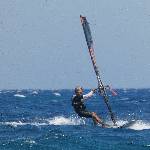
Overpowered: Windsurfing When It's Cranking

Quick summary
Control in strong wind comes from the right sail size and trim first, then a low, relaxed stance that hangs your weight through the harness.
The instinct to dump power by sheeting out is the classic catapult trap - the fix is to stay sheeted in and steer the board with your feet.
The how-to
Read this and you will hold your kit together on the days that used to send you swimming.
The wind is up, the water is dark with gust lines, and every rig on the beach suddenly looks a size too big.
Strong-wind windsurfing is not about strength, it is about setup and staying relaxed while the power tries to throw you forward.
Get the kit and the stance right and a howling day becomes the best session of the month rather than a wrestling match.
Start with the right sail
The single biggest fix happens on the beach, before you touch the water.
Rig down one size before you think you need to, because the biggest sail you can just hold is never the fastest or the safest.
A smaller, fully sheeted sail gives you cleaner power and far more control than a big one you are fighting to keep flat.
If you are hesitating over which sail to grab, that hesitation is your answer - take the smaller one.
Trim for control, not comfort
Drop the boom to chest height, which pushes more of the sail's pressure down onto the mast foot and keeps the board planted.
Run your harness lines a touch longer than usual, around 2 to 4 inches, so you can hang your weight further out and off the rig.
Set the lines wider apart on a strong-wind sail, roughly 20 to 30cm, to spread the load and calm the sail's pull.
Move your footstraps to their wider, further-back settings so your feet have a stable, locked-in platform when it is bumpy.
The strong-wind stance
Hang, do not pull. Your body weight in the harness holds the sail down, not your arms, which should stay long and relaxed.
Drop your hips down and back and dig your heels in, a principle veteran coach Peter Hart has taught for decades as the key to staying planted.
Think hips out and upper body in, the opposite of the light-wind lean, so your weight sinks low and counters the rig.
Bend your legs more than feels natural and let them soak up the chop while your torso stays quiet and centred.
The biggest sail you can just hold is never the fastest, and it is never the one that keeps you out of the water.
Read the water ahead
Look upwind, not down. Dark, ruffled patches on the surface are gusts marching toward you, while glassy strips are lulls.
Spotting a gust two or three seconds early is the difference between absorbing it and getting launched by it.
As the gust hits, put more weight on your back foot and let the board bear away slightly to bleed off the extra power.
The counterintuitive bit
Sheet in, do not sheet out. Panicking and opening the sail lifts the nose and fires you over the front in a catapult.
Keeping the sail sheeted in actually glues the board to the water, and you control the power with your body and your course instead.
Here is the insight most people miss: your rig and harness trim barely change across wind strengths - you adjust your legs and your line, not your setup.
Where it goes wrong
The catapult almost always starts with sheeting out in fright, so train yourself to hold the sail and bear away instead.
Bent, pulling arms are the next culprit, tiring you out fast and dragging you over the front - straighten them and let the harness take the strain.
A boom set too high or harness lines set too short leave you no leverage, so you get yanked upright and off balance.
Staring down at your board hides the gusts, so lift your eyes and keep scanning the water upwind.
And too much pride to rig down is the mistake behind most of the others on a big day.
Stay safe when it's honking
Check the wind direction first, because a strong offshore breeze will blow a tired sailor out to sea faster than they can water-start back.
Know your self-rescue before you need it, and carry the confidence to derig and paddle in if the session turns.
A helmet and an impact vest earn their place once the wind and chop are up, and sailing within sight of others is simple insurance.
Check the forecast strength and timing on the Seabreeze wind forecast before you rig, and swap notes with locals in the forums about how a spot handles a big blow.
Common questions
What if I don't own a smaller sail? Move the boom down, lengthen the lines, and sail more conservatively, but treat a dedicated small sail as the best strong-wind investment you can make.
How do I know my harness lines are right? Hanging relaxed, the boom should sit level and the sail balanced with no need to pull in with either hand.
Should I use footstraps if I'm not confident? Yes, but ease in - the back strap first, then both, once you can hold a settled stance without fighting the rig.
What should I work on next? A clean, early water-start, because strong wind means more falls, and getting back up fast keeps the session fun.
Next windy day, rig down one size before you think you need to and spend the whole session just holding a low, relaxed, hips-down stance - control first, and the speed follows on its own.