How to Get Started on a Stand Up Paddleboard
In short
Stand up paddleboarding is one of the easiest ways onto the water, and most people are standing and gliding within their first session.
The trick is a few simple fundamentals, from how you stand up to how you hold the paddle the right way around.
The how-to
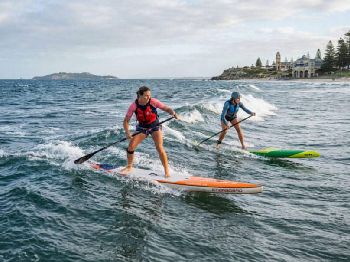
Start on flat, sheltered water, rise from your knees one foot at a time, and paddle with the blade angled forward.
Few watersports are as welcoming as stand up paddleboarding, which is why you see beginners cruising happily on any calm morning.
The gear is simple, the learning curve is gentle, and a board gets you exploring coastline and estuary at your own pace.
A handful of fundamentals make the difference between a wobbly first go and a confident, comfortable session.
Here is how to get started, from choosing conditions to the basic stroke and staying safe once you are out there.
Pick the right board and day
A longer, wider board is far more stable, so beginners should choose the biggest board on offer rather than the sleekest.
Volume and width are your friends here, because a stable platform lets you focus on balance instead of fighting the board.
Just as important is the day, so pick calm, flat, sheltered water with little wind for your first few outings.
Glassy conditions on a protected bay or estuary make everything easier, while chop and wind punish beginners quickly.
Hold the paddle the right way
Almost every beginner holds the paddle backwards at first, so this is the single most common mistake to fix early.
The blade is not flat but slightly angled, and that bend should tilt forward, away from you, toward the nose of the board.
One hand goes on top of the handle and the other about shoulder-width down the shaft for a comfortable, balanced grip.
Get this right and each stroke pulls cleanly, rather than fluttering and pushing water in the wrong direction.
Stand up one step at a time
Do not try to leap straight to your feet, because starting on your knees is far steadier and builds confidence.
Kneel on the board just behind the centre handle, where the board sits most level and stable in the water.
When you feel balanced, bring one foot up to where a knee was, then the other, rising into a low crouch.
From that crouch, stand up slowly by lifting your chest first and straightening your legs last, keeping your weight centred.
"Look at the horizon, not your feet, because where your eyes go your balance follows."
Find your stance
Stand with your feet parallel and about hip-width apart, centred between the rails on either side of the handle.
Keep a slight bend in your knees and let your ankles, knees and hips absorb the board's movement like shock absorbers.
Stay upright through your upper body and resist the urge to hunch or stare down at the deck.
Looking ahead at a fixed point on the horizon steadies you far more than watching the water around your feet.
The basic stroke
Reach the paddle forward and plant the whole blade in the water before you start to pull.
Draw the blade back toward your ankles using your core and back rather than just your arms, then lift it out cleanly.
Paddle a few strokes on one side and the board will slowly turn, so switch sides regularly to track straight.
Swapping hands on the shaft as you change sides quickly becomes second nature after a little practice.
Turning and handling chop
To turn, take a long sweeping stroke, reaching wide from nose to tail on the side opposite the way you want to go.
When a boat wake or small wave approaches, turn to meet it head-on rather than letting it hit you side-on.
Bend your knees a little more and stay loose, letting the board move under you while your upper body stays quiet.
A relaxed, low stance rides bumps far better than a stiff, locked-out one that gets thrown off balance.
Stay safe on the water
Always wear your leash, attached at your ankle to the ring at the tail, because your board is your biggest flotation device.
Check the wind forecast before you go, and be very wary of offshore wind that can blow you away from the shore.
Paddle into the wind on the way out, so the trip home is with the wind rather than a hard slog against it.
Wear a personal flotation device where required, tell someone your plan, and build up your distance gradually as you improve.
Common mistakes
Holding the paddle backwards. The angled blade should lean forward, away from you, so double-check it before every session.
Looking down at the board. Staring at your feet kills your balance, so lift your gaze to the horizon instead.
Standing too far back. Position yourself over the centre handle, because too far back sinks the tail and makes the board unstable.
Ignoring the wind. Heading out with an offshore breeze behind you means a hard and sometimes dangerous paddle back.
Common questions
Is stand up paddleboarding hard to learn?
No, as most people stand and paddle within their first session, especially on a wide board in calm, flat water.
Which way does the paddle blade face?
The angled blade should tilt forward, away from you, toward the nose of the board, which is the opposite of what feels natural.
Do I really need a leash?
Yes, because if you fall the wind can push the board away faster than you can swim, and the leash keeps it with you.
What wind should I avoid?
Avoid strong or offshore winds as a beginner, since offshore breezes blow you away from shore and make the return paddle exhausting.
Check the Sydney wind forecast and the local NSW tide times before you plan your paddle.

The right food for Stand Up Paddling...
Supplement and nutrition company based entirely for water athletes.