Wing Foiling in Winter: Stay Warm, Stay Safe

Quick summary
Offshore winds are a hard no in winter - one fall in the wrong direction and you are drifting.
The right wetsuit for your region keeps sessions productive; the wrong one ends them early.
The how-to
After reading this, you will know how to check the forecast specifically for wing foiling hazards, dress for your water temperature, and launch safely in winter chop.
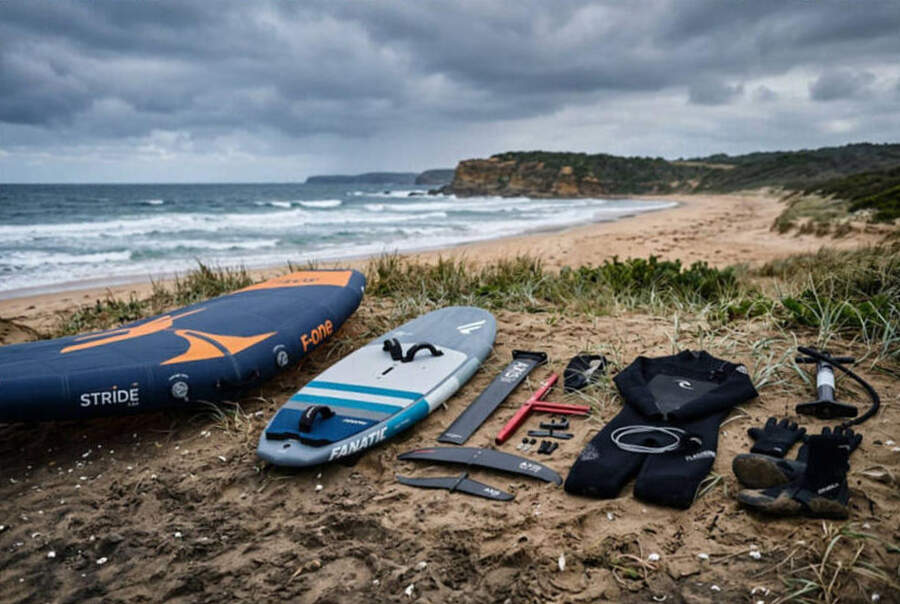
Wing foiling does not stop in winter - but it does demand a different level of preparation.
Australian winter water temperatures vary enormously: 23 degrees off Queensland in July, 12 degrees off Tasmania, 16 degrees off Sydney, 14 degrees off southern Victoria.
Those numbers dictate everything from your wetsuit choice to how long you can stay in the water after a wipeout before your hands stop working.
Winter sessions in Australia can be the best of the year - fewer people, steadier gradient winds from cold fronts pushing through, and clean water with better visibility.
But the margin for error is smaller, and reading conditions correctly before you launch matters more when the water is cold.
The wind window - where things can go wrong fast
Wing foiling biggest winter hazard is not swell, cold water, or gear failure.
It is launching in offshore wind.
An offshore wind blows from land to sea - it may feel lighter and cleaner on the beach, but it will carry you away from shore with every fall.
In summer, an offshore drift is inconvenient and embarrassing.
In winter, with cold water draining your energy and fewer people on the water to spot you, it becomes dangerous quickly.
Side-shore and cross-onshore winds are the only safe options for wing foiling - the wind should be blowing across the beach or onto it, not away from it.
To check this before leaving home: look at the wind forecast direction for your launch spot and draw a mental line from land to sea.
If the wind arrow is pointing out to sea, stay on the beach.
Cold fronts that push through in July and August often bring a rapid wind shift - northwest ahead of the front turning south-southwest behind it.
That northwest pre-frontal wind is frequently offshore for east-facing beaches on the NSW and Queensland coasts.
It feels good - it is often strong, steady, and dry.
It is also one of the conditions responsible for most wing foiler rescues in Australian winter waters.
"Onshore or cross-onshore winds are your friend. Offshore winds are a hard no in winter conditions."
That principle applies everywhere from Sydney Harbour to Jervis Bay to Port Phillip Bay in July - the water is cold enough that staying closer to shore is the non-negotiable rule for winter wing foiling.
Wetsuit selection by region
Your wetsuit is your single most important piece of equipment in winter.
Wing foiling creates a specific challenge: you generate a lot of body heat while actively riding, then lose it fast in the water after a fall.
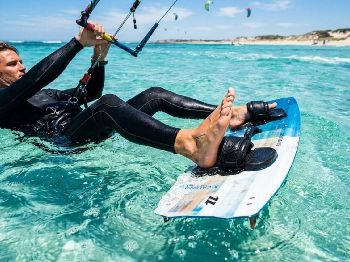
A wetsuit that is right for surfing in the same location may be insufficient for wing foiling - the combination of wind chill on exposed skin while riding and rapid chilling in the water demands a suit with good wind-blocking on the exterior.
Smoothskin neoprene chest and back panels cut wind chill significantly while riding at speed.
For Australian conditions by region:
Queensland (water 21-24 degrees in July): a 2mm or 3:2mm springsuit is usually sufficient for daytime sessions, with a 3mm shortarm option for early morning.
NSW (water 16-18 degrees in July): a 3:2mm or 4:3mm full wetsuit, with gloves once the water drops below 17 degrees.
Victoria and SA (water 12-15 degrees in July): a 5:4mm full suit with hood, gloves, and 5mm booties is the minimum.
Tasmania (water 10-13 degrees in July): 5:4 or 6:5mm with sealed hood and gloves.
Gloves matter more than most riders expect - cold fingers lose grip on the wing handle faster than anything else, and a hand that cannot close properly cannot manage a harness or a tack.
Setting up gear in the cold
Cold hands and rushed rigging cause more gear problems than anything else in winter.
Inflate your wing before you change into your wetsuit.
Run through foil assembly and mast tightening while still in warm clothes - cold fingers will not catch a loose bolt before a session but they definitely cannot fix it after something breaks.
Torque check every mast bolt before entering the water - temperature cycling over winter causes aluminium mast components to loosen faster than in summer.
If your foil runs a carbon mast, check the base plate hardware specifically - cold water accelerates corrosion at dissimilar metal joints over the course of a winter.
Launching in chop
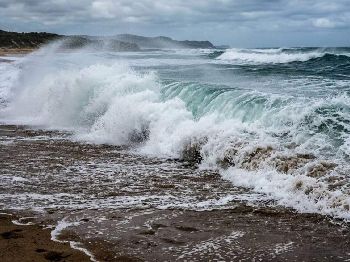
Winter swell and chop from cold fronts creates a specific launch challenge for wing foilers - particularly on ocean beaches and exposed harbour entrances.
The goal when launching in chop is to get airborne as quickly as possible, because a wing foiler on the surface in chop is fighting every wave and losing energy fast.
Launch into the wind with the wing neutral - held overhead in the window without generating power - and use the brief lull between waves to start moving.
Once moving, power the wing and pump the board aggressively to get onto foil before the next wave arrives.
In chop above 0.5 metres, add at least 20 litres of extra board volume to your usual summer setup - stability on the surface matters more in cold conditions because you cannot afford multiple failed launch attempts before your energy drops.
Many experienced Australian wing foilers use a dedicated winter board with 10-20 litres more volume than their summer board for exactly this reason.
Reading the forecast for wing foiling
BOM marine forecasts are the primary tool, but they are designed for sailors and boaters - interpreting them for wing foiling needs a specific lens.
Look for two numbers: wind direction and wind speed.
For most Australian coastal spots, the ideal wing foiling window is a steady 12-25 knots with a side-shore direction, a surface swell below 0.75 metres, and no forecast front within six hours.
Red flags to check for: any mention of "variable", "gusty", "squally", or "ahead of a cold front" in the BOM synopsis.
Variable and gusty conditions create power spikes that are manageable in summer but dangerous in winter when your reactions are slower and the water is colder.
A cold front itself typically brings a clear sequence: northwest freshening ahead of the front (often offshore for east-facing beaches), then rain and a wind shift to southwest or south behind the front.
The wing foiling window is usually one to two hours either side of the front passage itself - the front-line winds are typically squally and unsuitable.
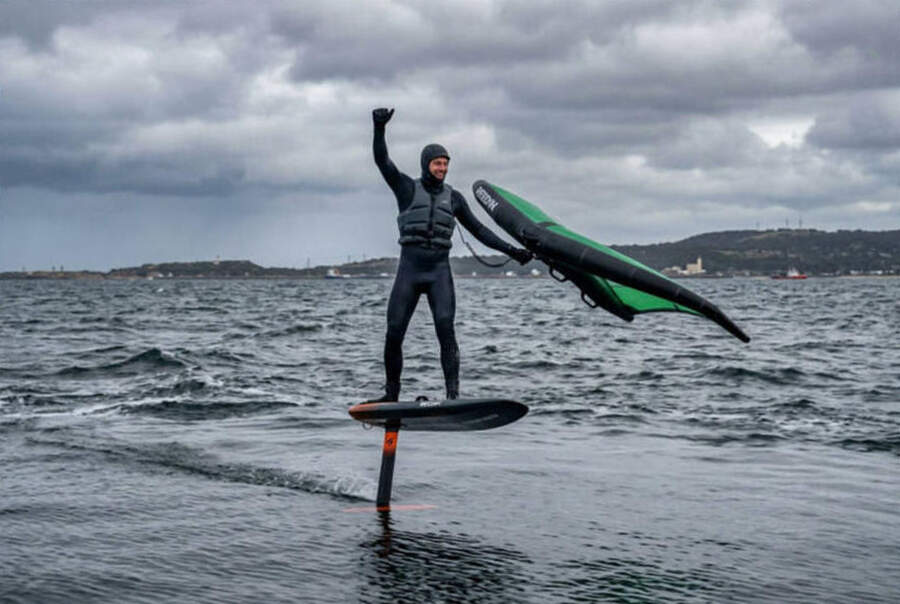
What to do when it goes wrong
Three scenarios, and how to handle them:
Overpowered in a gust: depower the wing by letting the front hand release - the leading edge should drop and spill air immediately.
Do not fight an overpowered wing with both hands - you will lose, the foil will breach, and the fall will be harder than needed.
Downwind drift after a fall: immediately assess your distance from shore and the wind direction.
If you are drifting offshore, do not try to wing upwind in rough conditions - lie on the board, use the wing flat to the water with the leading edge into the wind as a sea anchor to slow the drift, and signal for help.
Cold hands mid-session: come in early.
Paddling power and grip both degrade fast once finger dexterity reduces - and cold water immersion accelerates this much faster than most riders expect.
A short session ended well is always better than a long session that becomes a rescue.
State maritime safety authorities in New South Wales, Victoria, Queensland, and Western Australia require personal flotation devices to be worn or accessible while wing foiling on ocean waters - check your state authority requirements before heading out.
Questions worth thinking about before your next winter session
What size wing in cold air? Cold air is denser than warm air, so a given wind speed generates slightly more wing pressure in winter - many riders find they can drop down a wing size from their summer go-to in the same wind speed.
What about foil setup in winter? A lower-aspect-ratio foil with more lift works better in winter chop - it gets you airborne faster and stays stable through surface turbulence, which matters more than top-end speed when the water is cold.
How do I know if my wetsuit is warm enough? If your hands are numb after 30 minutes in the water, your suit is not adequate - upgrade gloves first, then wetsuit thickness.
Can I wing foil alone in winter? Not recommended on open ocean or exposed harbour spots - ride with at least one other person on the water, or with someone watching from shore.
Track local wind conditions before every session via the Seabreeze wind forecast for your region and check state marine warnings for any hazard notices before launching.