The Bar Crossing: Wait for Slack Water

Quick summary
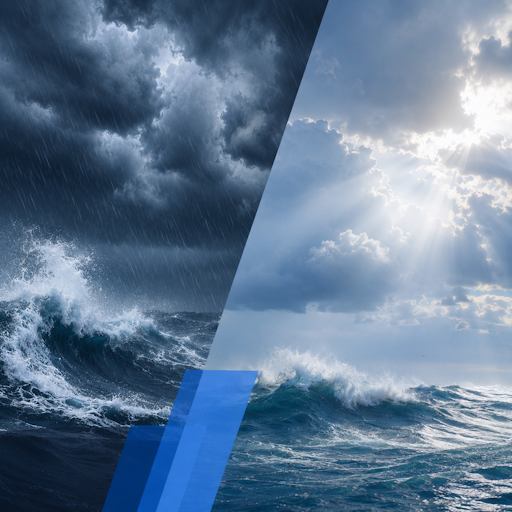
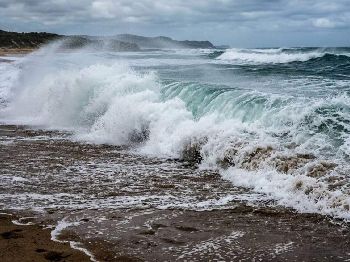
A coastal bar is the shallow sand shoal across an estuary mouth where ocean swell meets outflowing river water and stands up to break.
The dangerous moment is not the biggest wave of the day, it is an outgoing tide pushing against incoming swell, which steepens the bar and steals your boat speed at the same time.
The how-to
Watch the bar from high ground, count the sets, then cross on slack water or the first of the flood in one committed run through a lull.
Preparation
Do your thinking at the kitchen table and your looking from high ground, because a bar you have not seen from above is a bar you are guessing at.
Pull the tide times for the day and mark the two windows that actually matter, high water slack and the first hour of the flood.
You can get the times for your local entrance from the tide tables and work backwards to a launch time that suits the bar rather than the alarm clock.
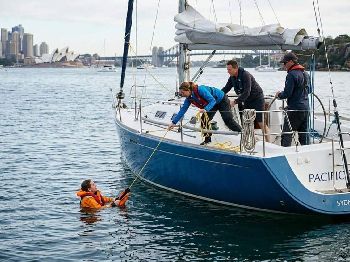
Lifejackets go on before you leave the last calm water inside, not when the first face stands up in front of the bow.
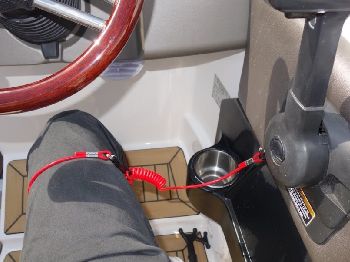
Clip the kill cord to your leg or your belt every time, because a bar is the worst place in Australia to lose the helm and the motor at once.
Shut the hatches, check the bungs, stow loose gear low and aft, and make sure nothing can roll under a pedal or a pump.
AMSA recreational bar-crossing practice is plain enough: lifejackets worn, kill cord attached, and a dedicated lookout who does nothing but watch the water behind you.
Load the boat stern-heavy rather than bow-heavy, because a loaded bow buries itself where an empty one lifts clear.
Stand off in the last of the calm water and watch for ten minutes at least, counting the sets and the gaps between them.
Count sets, not waves, because the gap between groups is the only thing you are going to use.
Log on with the local marine rescue group, or at the very least tell someone ashore your plan, your crew count and your return time.
If the entrance is new to you, the local knowledge in the forums will tell you which side of the channel the sand has shifted to this season.
A fair school range for a first crossing is swell under about 1.5 m with little wind, which is a starting point and not a rule.
Slack water is not calmer-looking water from the ramp, it is slower water on the bar, and slower water is what keeps the face from standing up.
Initiation
Wait for the lull that follows a set, then go, because the window you want is the one that opens behind the last big face.
Line the boat up square to the crests while you are still in deep water, so you are not steering and accelerating at the same time.
Commit in one movement and keep going, since the one thing you cannot do safely is hover in the break while you think it over.
No second thoughts, because changing your mind halfway across is what puts a boat side-on in the worst water on the shoal.
If the gap does not feel long enough to clear the whole bar, let it go and wait for another cycle.
Commitment
Carry enough speed to stay ahead of a crest that is about to break, and not so much that you drive the bow into the back of the next one.
Meet each wave bow-on, power on as the hull lifts, then ease as the crest passes under you and the bow drops.
Keep the trim slightly bow-up so the forefoot rides over the face instead of spearing through it.
Watch the water rather than the screens, and let the lookout call the sets behind you while you work the throttle.
The trap is the ebb, because outgoing current against incoming swell shortens the wave, steepens the face and pulls speed out of the hull all at once.
Execution
Once you are through, hold a straight line out into deep water before you turn, because the last of the break will still catch a beam-on boat.
Give yourself a couple of hundred metres of clear water, then settle the boat, check the crew and look back at what you just crossed.
Coming home is the harder half, so stand off outside the break and watch the sets again before you choose anything.
Pick the lull, then sit on the back of a wave and match its speed, letting it run away in front of you.
Do not surf it in, because a boat on the face of a breaking wave will broach before you can correct.
If the gap closes on you, turn out to sea early and take the next cycle rather than accepting a bad one.
Failure diagnosis
Most bar incidents trace back to a short list, and nearly all of them are decisions made before the boat ever reached the break.
Leaving on a strong ebb because the ramp looked flat is the common one, since the ramp tells you nothing at all about the shoal.
Stopping in the break to look, to sort gear or to talk is next, because a stopped boat has no steering and no way out.
Turning side-on, usually while backing out of a decision, puts the longest part of the boat against the steepest part of the wave.
Nobody on the radio means nobody knows you were there, and nobody starts looking at the time that would have made a difference.
An overloaded bow carrying the anchor, the ice box and two crew forward will push under where a balanced boat lifts clear.
Have you watched this bar through a full set cycle today?
Ten minutes from high ground tells you more than any forecast about what the sand is doing this week.
Does your window sit on slack water or the first of the flood?
If it sits on the back half of the ebb with swell running, you do not have a window, you have a wish.
Is every lifejacket worn and is the kill cord clipped?
Both take ten seconds inside the river and neither one can be fixed once the bow is rising.
What is your plan if the gap closes halfway across?
Decide that before you commit, because the break is no place to invent a new plan.