The Foil Jibe: Keep the Foil Flying

Quick summary
A foil jibe is a direction change through downwind where the foil never stops flying, so you exit on the new tack still up and still carrying speed.
The turn that works is wide rather than sharp, because a tight radius bleeds off the speed your foil needs and dumps lift at the bottom of the arc.
The how-to
Set a stable height with slightly more speed than your cruise, look through a long arc, stay low and loaded through downwind, then rebuild height on the new edge and head back upwind.
You can already hold a straight line and pump back out, so the turn is the next thing standing between you and a full lap of the bay.
Almost everyone arrives at the jibe with the wrong mental model, treating the board like a skateboard and trying to snap it around a single point.
A foil is a wing, and a wing stops working the moment you take the flow away from it, which is exactly what a hard, tight carve does.
The rider who turns wide and feels slow is usually the one who comes out flying, while the rider who turns hard and feels fast is the one who touches down.
Most Australian bays give you a workable teaching window between 12 and 20 knots, with onshore or cross-onshore breeze and flat to lightly textured water.
If you are learning on the west side, the afternoon sea breeze pattern is predictable enough to plan around, so check the Perth wind forecast before you commit to a session.
Preparation
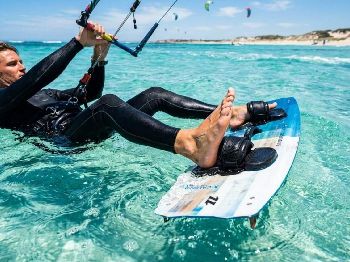
Wear your helmet and impact vest as usual, because a failed jibe puts you and the foil in the same patch of water at similar speed.
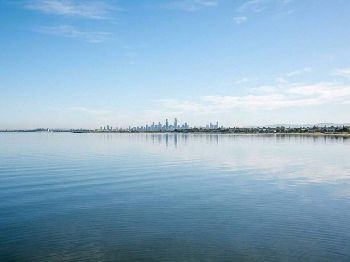
Start shallow, waist-deep water lets you walk the gear back into position without a long swim every time the turn goes wrong.
Get your height stable and sitting in the middle of your range, not scraping the surface and definitely not riding high on the edge of breaching.
High is the enemy here, because a breach mid-turn removes your lift at the exact moment you have the least control over where the board lands.
Carry a little more speed, you want slightly more than a comfortable straight-line cruise so the foil has something in reserve through the arc.
Pick a patch of water with consistent breeze and no obvious holes, because a jibe that starts in 15 knots and finishes in 6 knots was never going to work.
Initiation
Turn your head first and look through the turn, well past the board, toward the point on the water where you want to come out.
Where you look is where the arc goes, and riders who stare at the board almost always carve harder and tighter than they intended.
Soften the rail, ease the pressure rather than stamping on it, and let the board begin drifting into the arc.
The turn should start as a long, lazy sweep downwind, wide enough that it feels like you are drawing a circle rather than a corner.
Keep your weight settled over the mast and your knees soft, so the foil holds its angle of attack while the direction changes underneath you.
Commitment
The bottom of the turn, pointing straight downwind, is the moment most jibes are won or lost.
Your apparent wind drops here, the rig or wing goes light, and the instinct is to sheet out hard and stand up tall.
Stay low, keep your body compact and your weight committed to the inside of the arc.
Do not dump power by sheeting right out, because the foil needs load and speed to keep producing lift through the slowest part of the turn.
Let the foil carry you through the bottom rather than trying to steer it there with your back foot.
The foil does not care how tidy your turn looks from the beach. It only cares whether you kept enough speed to keep lifting.
If you feel the board sinking toward the water here, resist the urge to pump hard, because a big pump at low speed usually pitches you forward instead.
Execution
As the arc comes around past downwind, shift onto the new edge and let the board settle onto the other rail.
Your front foot and back foot swap roles, and the pressure moves across the board as the apparent wind rebuilds on the new tack.
Rebuild height, ease the nose up gradually once you feel speed returning rather than reaching for altitude straight away.
Then head back upwind, which both restores your speed and buys back the metres of ground you gave away through the arc.
Expect to lose 20 to 40 metres downwind on early attempts, which is one reason you want space below you before you start.
Failure diagnosis
If the foil stalls and the board drops mid-turn, your radius was too tight and you took the flow away from the wing.
If you breach and the board slaps down sideways, you were riding too high going in and the turn pushed the foil up through the surface.
Watch your eyes, if you cannot remember what the horizon looked like, you were staring at the board and over-carving.
If the turn felt fine until the breeze disappeared, you jibed into a wind hole and no technique would have saved it.
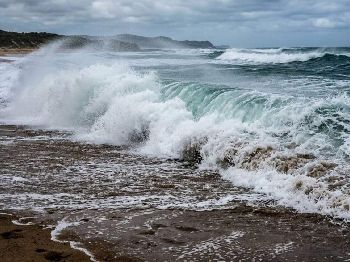
If the whole thing feels unpredictable and the water looks bumpy and dark upwind, you are in offshore breeze, which is the worst place to learn this.
Fix one fault per session rather than all five, and film a few attempts from the beach so you can see how tight your arc really is.
Riders in the forums swap plenty of footage of jibes that look slow and work, next to jibes that look sharp and do not.