Reefing Early: Shorten Sail Before You Must

Quick summary
Reefing early keeps your boat balanced, faster and far easier to handle when the breeze builds past comfortable.
The first reef usually goes in around 15 to 20 knots, well before the rail is buried and the helm is fighting you.
The how-to
After this you will know when to reef, how to shorten the mainsail cleanly, and how to spot the mistakes that turn a reef into a drama.
You already know how to sail your boat in a steady breeze, to tack it, gybe it and trim it for speed.
What separates a relaxed skipper from a stressed one is knowing when to take sail away, and doing it before conditions force the decision.
Reefing means reducing the area of your mainsail so the boat carries less power, sits more upright and steers with less effort.
A boat sailed flat is a boat sailed fast, and past a certain angle of heel you are simply spilling wind and dragging the rudder sideways.
Reading the signs before you reef
The clearest cue is heel: once the boat lies over past roughly 20 degrees and will not come back up, it is carrying too much sail.
The helm tells the same story, loading up with weather helm that drags you toward the wind and forces constant correction.
On most cruising yachts the first reef goes in when true wind settles around 15 to 20 knots, or sooner if the gusts are already touching 20.
The second reef follows near 25 knots of steady breeze, and a third is genuine heavy-weather territory above that.
The golden rule holds: if you are wondering whether to reef, you already should.
"A reef put in on deck before you need it is almost always the right call."
Why early beats late
Shortening sail early is a five-minute job in control, while shortening it late is a scramble on a pitching deck with the boat overpowered.
An over-canvassed boat heels hard, rounds up into the wind and loses drive, so you actually go slower for all the extra chaos.
Reef in time and the boat stands up, the helm lightens, and your speed often climbs because the hull is finally sailing on its lines.
Here is the counter-intuitive part: reefing usually makes you faster upwind in a breeze, because a flatter, more upright boat drags less rudder and points higher.
The reef, step by step
Start by preparing everything while you still have sea room and a settled hand on the helm.
Point the boat onto a close reach or head to wind so the mainsail depowers and stops pressing hard against the rig.
Ease the mainsheet and the kicker to take the load off the sail before you touch the halyard.
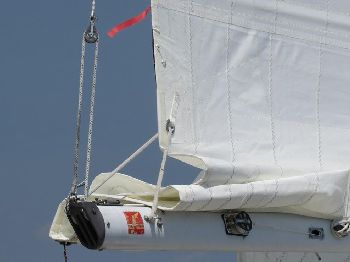
Drop the main halyard to the marked reefing point, then hook the luff cringle over the ram's horn or pull on the tack line.
Re-tension the halyard hard to set the new luff, then wind on the reef line at the clew until the foot is firm and flat.
Sheet back on, bear away onto course, and tidy the loose bunt of sail with reef ties so nothing flogs or fills with water.
What it should feel like
Done right, the boat settles under you: the heel eases, the wheel or tiller goes light, and the noise drops away.
If the helm still fights you and the leeward rail is awash, that is the boat asking for the next reef.
A correctly reefed main looks flat and quiet, with tension along the foot and no deep, powered-up belly in the sail.
Where reefs go wrong
Leaving it too late is the classic error, and it turns a calm job into a fight with a flogging sail and a boat on its ear.
Forgetting to ease the kicker keeps load in the leech, so the sail will not drop cleanly and the reef jams halfway down.
Skipping the halyard tension leaves a baggy luff that powers the sail straight back up and defeats the whole point of reefing.
Loading the clew before the tack pulls the sail out of shape and can tear the reefing cringle, so always set the luff first.
Sailing off before tidying the bunt lets loose cloth scoop water and chafe, quietly wearing through your mainsail over a season.
Staying safe while you work
Clip on before you leave the cockpit, because the foredeck is where most people go overboard and a reef often needs a hand at the mast.
Keep one person on the helm holding the boat steady while another works the halyard and reef lines.
Carry and wear a lifejacket rated for offshore use, and treat cold winter water as the real hazard it is when a reef goes wrong.
Taking it further
What if my boat has in-mast furling instead of slab reefing?
The timing is identical, but you reduce sail by rolling it away, so keep tension on the outhaul and never furl on a hard-loaded leech.
Should I reef the headsail too?
Yes, balance the rig by rolling away some genoa as you reef the main, or the boat will develop lee helm and feel sluggish.
How do I know my reef points are set right for my boat?
Practise in a steady 15 knots on flat water, mark your halyard, and time yourself until the whole sequence takes under two minutes.
Next time out in a building breeze, put a reef in early on purpose, feel how the boat stands up and settles, and use the Seabreeze wind forecast so you are reefed before the front, not after it.
Compare notes with other skippers on the Seabreeze forums to learn when they choose to shorten sail on their own boats.