The Safety Stop: Three Minutes That Matter

Quick summary
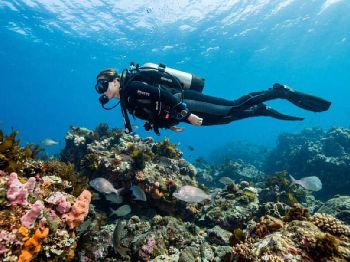
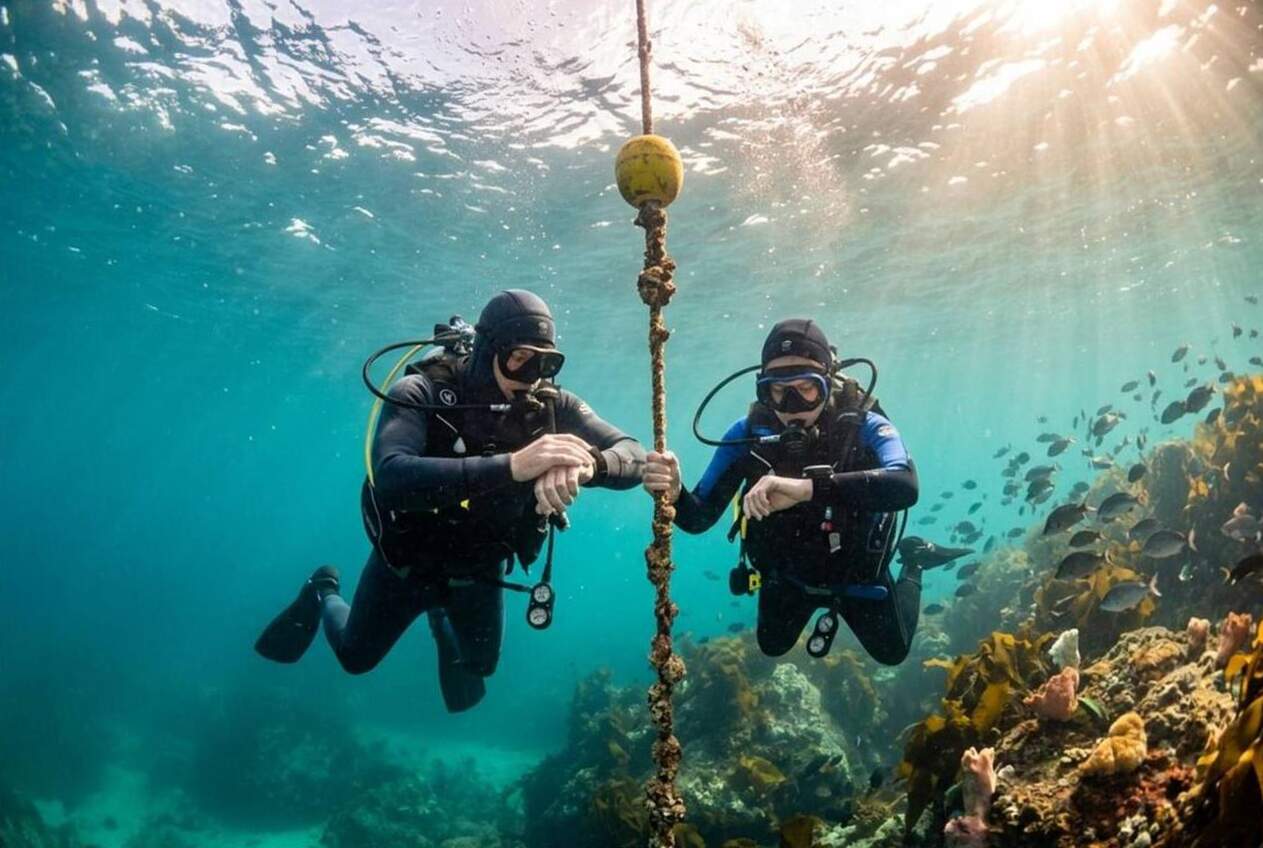
Every recreational dive should end the same way, with three minutes held steady at five metres before you break the surface and climb the ladder.
PADI includes the safety stop as standard recreational practice, especially after dives deeper than 18 metres, and SSI teaches the same five metre, three minute stop.
The how-to
Hold depth with your buoyancy rather than a hand on the reef, keep a fixed reference in view, and run the full three minutes even on an easy dive.
Preparation
Gas first, the stop only works if you leave the bottom with enough air in the cylinder to spend three unhurried minutes shallow.
Most divers who skip the stop skip it because they turned the dive late, not because they decided the physiology did not apply to them.
Work backwards from your planned depth and set a turn pressure that leaves you 50 bar or more at five metres.
Know your computer, because some units prompt the stop automatically while others simply display depth and leave the counting to you.
Check the conditions before the boat run, because a five metre stop in heavy surge is a different job to one in still water.
Tide state changes visibility and current on a lot of Australian sites, so have a look at the tide times for the day.
Initiation
Start the ascent early, so that arriving at five metres feels like the plan rather than an afterthought at 40 bar.
Ascend no faster than your computer allows, which for most recreational units means nine or ten metres per minute through the shallows.
Slow the last part of the ascent deliberately, because the closer you get to the surface the more the pressure changes per metre.
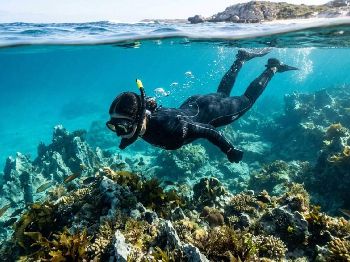
Level off at five metres, find your reference, and only then look at your computer to start the three minute count.
Signal your buddy with a flat hand at chest height so you both agree on the depth and the timing.
Commitment
The part most divers get wrong is treating the stop as a rest break they can skip when they feel fine.
Nitrogen leaves your tissues fastest in the last few metres, where the ratio between tissue pressure and ambient pressure is at its steepest.
Coming straight to the surface from ten metres dumps that steep part of the gradient in seconds instead of letting it work for you.
The three minutes at five metres are not a pause in the dive; they are the part of the ascent where the gradient flattens out.
Feeling fine tells you nothing, because the symptoms you are avoiding do not announce themselves while you are still in the water.
Run the stop on every dive so that it becomes automatic, rather than a decision you make when tired at the end of a long day.
Execution
Buoyancy, not fins, holds you at five metres, and a diver kicking to stay down is a diver about to bump the reef.
Vent to neutral on arrival, then expect to add a short burst of air as the cylinder lightens over the three minutes.
An aluminium cylinder can swing several kilograms of buoyancy across a dive, and most of that swing shows up when you are shallow.
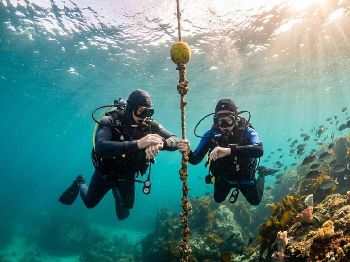
Keep your eyes moving between your computer, your pressure gauge and a fixed reference such as the shot line, a wall or the mooring.
A visual reference beats any gauge for spotting slow drift, because your eyes notice a metre of movement before the display updates.
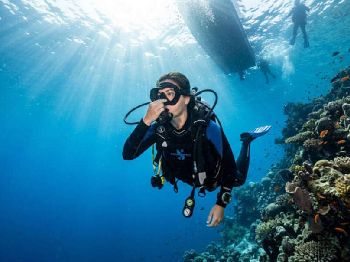
Never free-hover under a boat you cannot see clearly, and stay well clear of the transom and the propellers while the stop runs.
Breathe normally and slowly, since holding your breath at five metres is both a lung risk and a fast way to float off your depth.
Where there is surge, ride it rather than fight it and accept that your depth will oscillate around five metres by a metre either way.
Time your final metres between swell sets so that you surface in a lull and not in the face of a breaking wave.
Hold your trim flat and relaxed, because a vertical diver with busy fins burns gas and drifts upward without noticing.
Failure diagnosis
You popped to three metres, so descend back to five and restart the count rather than deciding the stop is close enough.
Surfacing early because you overshot turns a small buoyancy error into a missed stop, which is the one outcome worth avoiding.
If the seas are too rough to hold five metres at all, drift a little deeper and stay a little longer.
A stop at six or seven metres for four or five minutes is far better than bouncing between the surface and three metres.
If you are out of gas for the stop, you have a planning problem to fix on the surface rather than a depth problem to solve underwater.
Note the shortfall in your log, look at where the dive ran long, and adjust your turn pressure for the next one.
If your buddy keeps surfacing ahead of the count, agree on a hand signal and a reference point before the next descent.