The Pump: Keep the Foil Flying

Quick summary
- A pump is a timed change in angle of attack, not a leg press.
- Start pumping before you feel the speed go, while flow is still attached.
- Think slow down, slow up, in a rhythm of roughly one second per cycle.
- A late, oversized pump stalls the wing and drops you flat.
- Best practice ground is 8 to 12 knots with holes in it, on flat water.
The how-to
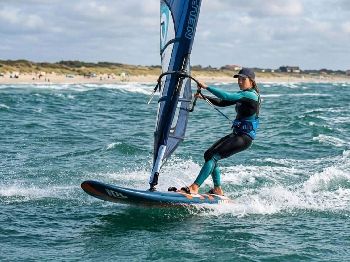
Most riders lose the foil in a lull because they wait until they are already sinking, then heave once with everything they have.
That single big pump spikes the angle of attack past the point where the water can follow the wing, and you get a stall instead of lift.
The fix is unglamorous: smaller pumps, earlier, in a rhythm you can hold for 20 or 30 seconds.
Why the pump actually works
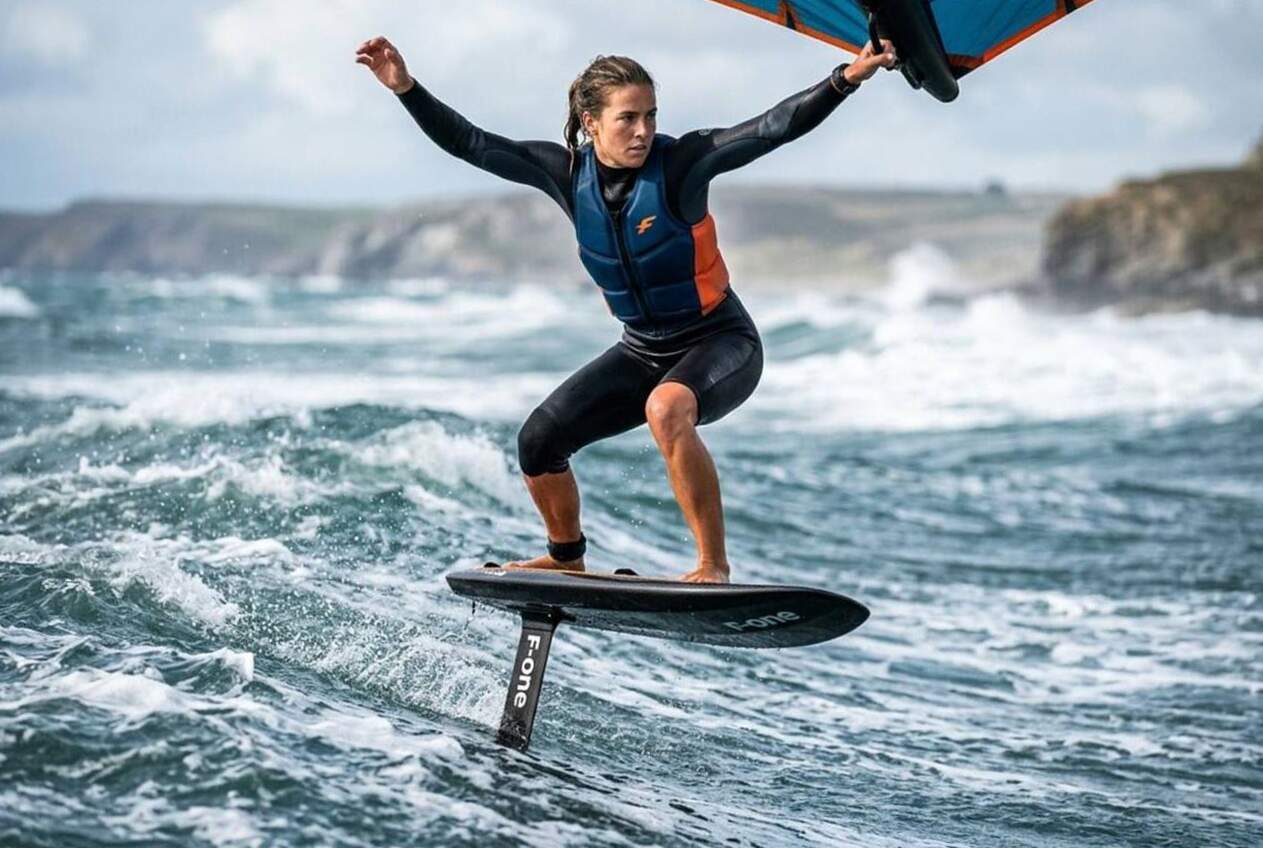
Lift is a trade between speed and angle. Your front wing makes lift from how fast it moves and how much it is tilted into the flow, so when the wind drops and speed bleeds away you have to buy the missing lift with angle.
A pump is a loan, not a gift. On the down phase you load the wing and it gives you lift, and on the up phase you unload it so it can accelerate slightly and pay that lift back.
Drag is the tax. Every degree of extra angle also adds drag, so a huge pump costs more speed than the lift it earns, which is why pumping harder is usually slower.
Attached flow is the whole game. Small early pumps keep water tracking cleanly over the wing, while one late shove separates the flow and no amount of leg strength brings it back.
You are not lifting the board with your legs, you are asking the wing for one more degree at exactly the right moment.
Working foil coaches on the Gold Coast and in WA teach that same slow down-up pump rather than a panicked bounce, and Australian Sailing foiling class squads drill it as a set exercise rather than leaving it to luck.
Prep: read the hole before you reach it
Look 20 to 40 metres ahead. A lull shows as a glassy, dark, textureless patch, and if you can name it early you can arrive with speed instead of arriving broke.
Build speed on the way in. Bear away slightly in the last of the good pressure so you enter the light patch with 2 or 3 knots in the bank.
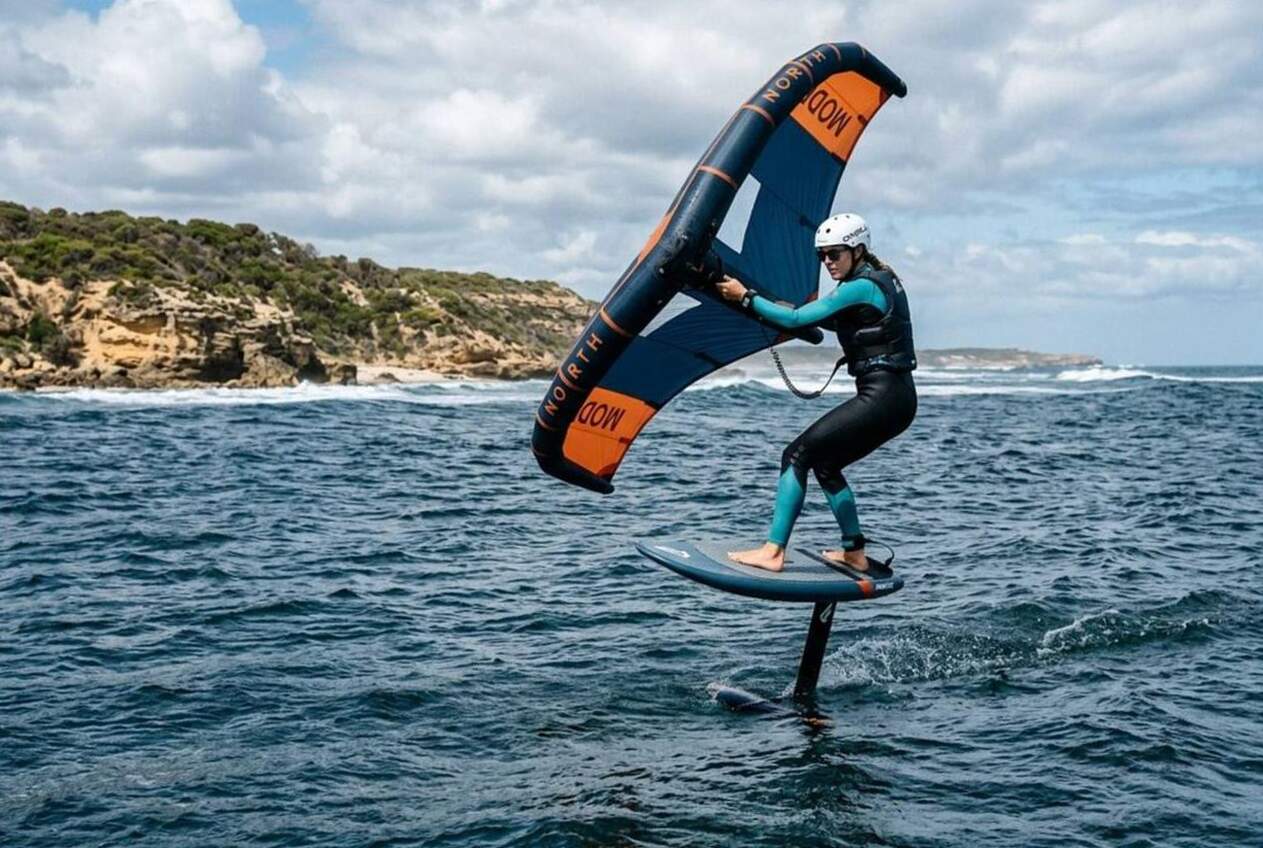
Set your stance. Knees soft, hips over your feet, weight a touch forward of neutral, and eyes up the track rather than down at the mast.
Choose a middle ride height. Too high and a stall drops you a long way, too low and the fuselage drags, so sit the wing mid range where you have room to move.
Initiation: the first small pump
Start while it still feels fine. The moment the rig or wing goes light in your hands, that is your cue, not the moment the board settles.
Down phase. Compress smoothly and drive pressure back through the rear foot so the wing tilts a little and generates lift, taking about half a second to do it.
Up phase. Rise and shift pressure gently forward so the wing flattens off, letting it accelerate and drop a few centimetres before the next cycle.
Keep the amplitude tiny. Your first pumps should move the board maybe 5 to 10 centimetres, which is enough to hold height without bleeding your remaining speed.
Commitment: hold the rhythm
Trust the metronome. Once the cycle starts, keep it even and keep breathing, because irregular pumping is what turns a small deficit into a splash.
Use the sail or wing in time. Sheet in slightly on the down phase and ease on the up phase so rig and foil pull together rather than fight each other.
Steer for apparent wind. A gentle bear away of 10 or 15 degrees adds apparent wind for free, and free wind always beats extra leg work.
Aim at the return. Point at the darker, textured water where the pressure is, and treat the pump as a bridge to that patch rather than an endless activity.
Recovery: land the transition
Stop pumping when the breeze arrives. Extend your legs, settle the wing at cruising height and let the new pressure do the work instead of fighting your own rhythm.
Reset your trim. Move back to your normal stance, unload the rear foot and feel for the quiet, neutral pressure that says the foil is flying properly again.
If you touch down, stay calm. Keep the board flat, avoid yanking the rear foot, and rebuild speed before you ask for lift, because a stalled wing cannot be pumped out of a stall.
Mistakes that cost you the flight
Pumping too late. By the time the board is dragging, the wing has already lost its speed margin and every pump just adds drag.
Pumping too big. One oversized heave spikes the angle, separates the flow and drops you faster than doing nothing at all.
Pumping from the ankles. Locked knees and stabbing feet make noise but almost no lift, so drive from the hips and knees instead.
Sitting too far back. A tail-heavy stance means you are already at high angle before you start, which leaves you no room to add any.
Chasing the wrong water. Pumping across a dead patch to nowhere burns your legs, so always pump towards visible pressure.
Where to practise
Patchy afternoon sea breeze days are ideal, and checking the Perth wind forecast for a gradient with gaps in it will point you at the right session.
If you want to compare wing and mast setups for low-end pumping, the gear threads in the Seabreeze forums are worth a scroll before you buy anything.
Questions to ask yourself
Are you starting your pump on the first light feeling, or on the first drag?
Could you hold your current rhythm for 30 seconds without going anaerobic?
Are you pumping towards pressure, or just pumping in place?
How much of your last splash was the lull, and how much was one big panicked pump?
Next session, pick one 100 metre stretch of flat water, deliberately ride into three light patches, and hold small even pumps for 10 seconds each without letting the board rise more than 10 centimetres.