Your First Flight: Get Up on the Foil

Quick summary
Your first foiling flight is not about lifting the board; it is about building enough speed that the foil lifts it for you.
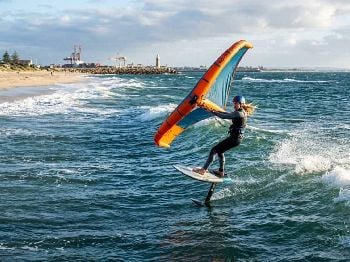
Get planing flat and stable first, keep your weight forward, then ease onto the back foot and let the board rise a few centimetres.
The how-to
After this you will know how to build speed safely, coax the board off the water, and settle into a smooth, controlled first glide.
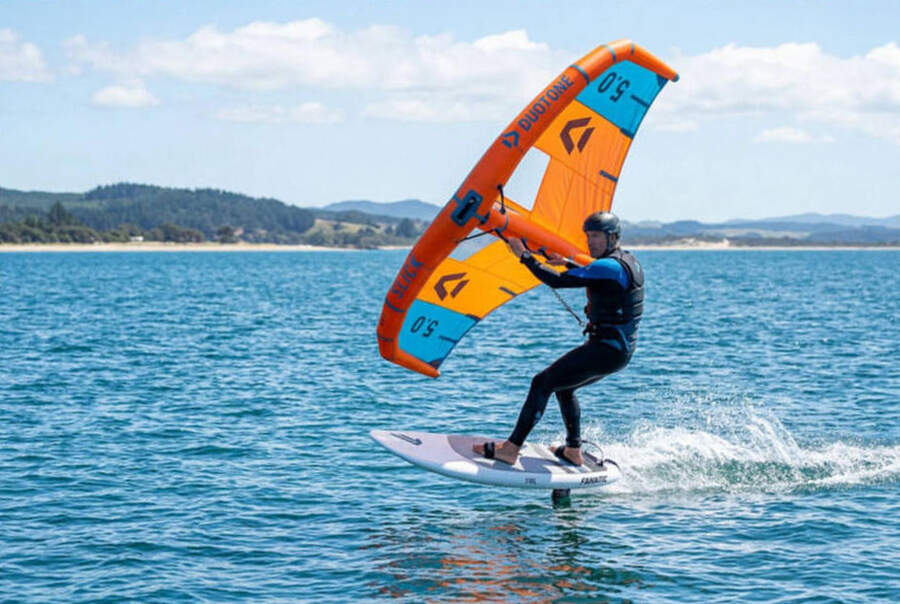
If you can already stand on the board and ride along with the wing powered up, you have everything you need to start flying.
The foil lifts the board clear of the water once you are moving fast enough, which is why speed, not effort, is the real key.
Get this right and the ride goes suddenly silent and smooth as the hull leaves the surface and the drag falls away.
Rush it and the nose shoots skyward and stalls, so the whole skill is learning to hold back until the moment is right.
Set up before you fly
Pick a day with steady, moderate wind and flat, sheltered water, because gusts and chop make that first delicate lift far harder to feel.
Stand with your feet roughly shoulder width apart, your back foot centred over the mast and your front foot ahead of it.
Keep your weight low and forward over the front foot, since front foot pressure is what holds the board down until you are ready.
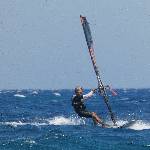
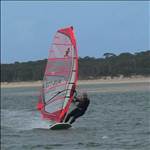
Sheet the wing in and bear away slightly to build speed, keeping the wing up and out of your line of sight.
Speed first, then flight
Resist the urge to lift straight away, and instead ride along flat on the water until the board feels light and fast beneath you.
Only when you have real speed should you ease a little weight back onto your rear foot to let the foil bite.
Aim to rise just a few centimetres at first, hovering the board barely off the surface rather than leaping into the air.
Think of taking off in a series of little hops, because each touch-down naturally shifts your weight forward and keeps the lift under control.
"The most important part of getting up on the foil is staying down off it; first the speed, then the flight."
Finding the balance point
Keep your body stacked in a straight line down toward the mast, so your weight drives cleanly against the lift below you.
Your centre of gravity, roughly between your feet, needs to sit over the front wing for the foil to fly level and stable.
Make tiny adjustments with your ankles and knees rather than big lunges, because the foil answers the smallest change in pressure.
Look ahead at the water, not down at the board, since where you look is where your balance naturally follows.
Keeping the power on
Keep the wing sheeted in and driving through the lift, because losing power now drops the board straight back onto the water.
In lighter wind, pump the wing by tracing a smooth oval with your hands to pull extra gusts of power into the sail.
You can add a gentle pump through your legs, flexing and extending to work the foil, once the basic flight feels steady.
Breathe and stay loose, since a stiff, tense body fights the small corrections that keep the foil flying smoothly.
Coming back down safely
To touch down on purpose, ease your weight forward and let the board settle gently back onto the surface.
If you need to stop, soften the back hand on the wing and press a little more on the front hand to level off.
Try to land the board flat rather than nose first, so it skims down instead of tripping and pitching you forward.
When you do fall, and you will often, push the board away and fall flat and clear of the foil beneath you.
Fixing the usual mistakes
Lifting too early stalls the board and pitches you off, so hold it flat and build real speed before you touch the back foot.
Taking off too steeply throws the nose skyward, so aim for a low, level hover just off the water.
Leaning back off the mast line tips the balance, so stack your weight straight down over the foil instead.
Losing wing power drops you back down, so keep the sail sheeted in and driving right through the lift.
Stay safe learning it
Wear a helmet and an impact vest, because the mast and wings are hard and sharp and a fall can bring you down onto them.
Learn in cross-shore or cross-onshore wind so a swim always brings you back toward the beach, never straight out to sea.
Dress for the water temperature with a good wetsuit, since you will spend plenty of time swimming while you find the balance.
Common questions
Why does my nose keep shooting up?
You are taking off too steeply or leaning back, so keep more weight forward and aim for a low, level hover instead.
How much wind do I need?
Enough to ride along comfortably powered up, since you need real speed to fly, but not so much that gusts overwhelm your balance.
Should I look at the board?
No, look ahead at the water, because staring down at your feet pulls your weight forward and unsettles the foil.
How long until it clicks?
Most people get short flights within a few sessions once wing handling is second nature, so keep the sessions short and frequent.
Pick your first flying day around a steady breeze using the Seabreeze Perth wind forecast , and swap local tips with other riders on the forums .