Read the Wind: Judge Its Force Without a Gauge

In short
The sea and the shore are a wind gauge you can read from the cockpit, no instrument required.
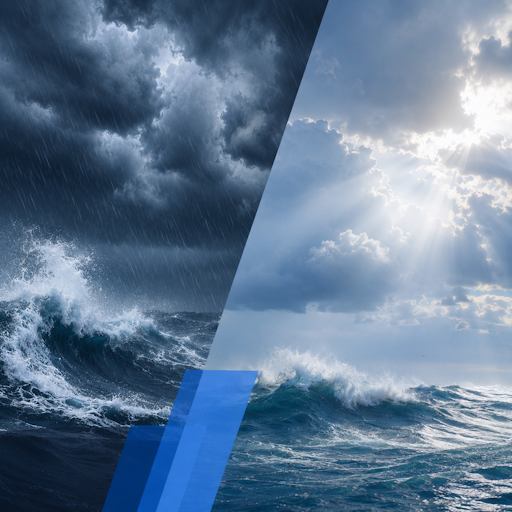
White horses at force 4, foam in streaks at force 8 - each Beaufort number has a look you can learn to spot.
The skill
Read the surface before you leave the mooring and you will pick the right sail plan every time you sail.
Long before anemometers, sailors judged the wind by watching the water, and the trick still works when your instruments do not.
The Beaufort scale was built for exactly this, tying each force to what the sea and the land actually look like.
Learn the cues and a glance across the bay tells you the force, the sail to set, and whether to go at all.
Start with the water
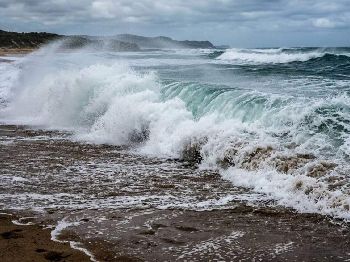
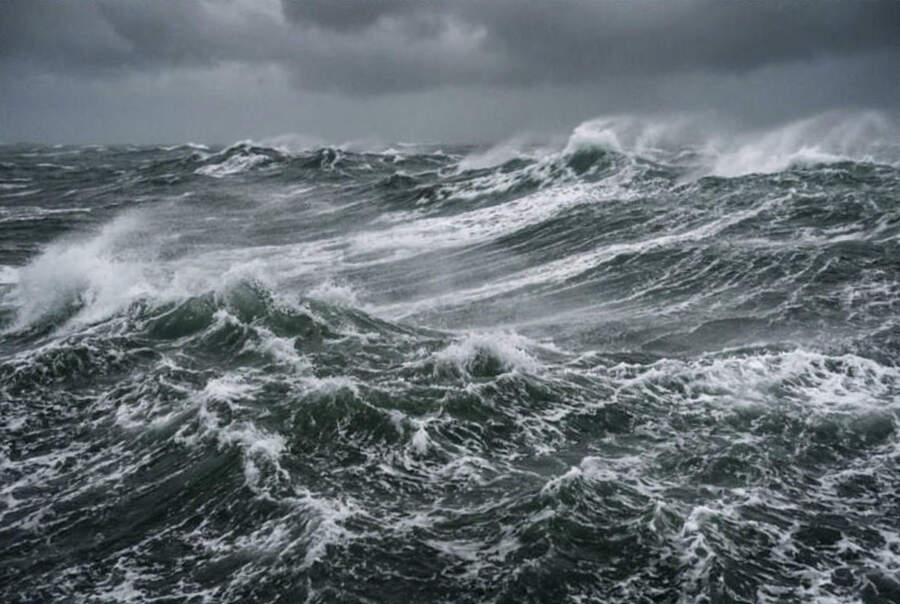
The single most useful marker is the white horse, the little breaking crest that first appears around force 3 to 4.
Below that the sea only ripples and glasses over; once crests tumble white, you are into a working breeze of 11 knots or more.
When those whitecaps cover the whole surface and spray lifts off them, you have reached force 6, the honest edge of comfortable cruising.
"When the foam starts blowing in streaks down the wind, the sea is telling you it is time to be somewhere else."
Push past force 7 and the foam no longer sits on the crests but streaks downwind in lines, the sea's clearest warning to reef hard or run for shelter.
Check the land as well
Ashore the same wind writes itself on smoke, flags, leaves and branches, which is handy before you even reach the water.
Smoke rising straight up is a flat calm; a flag standing out stiff and small branches swaying is a solid force 4.
Whole trees heaving and a hard push against your chest as you walk means force 7, near gale, and a rough day offshore.
This is the full scale as an observer reads it, on the water and on the land.
| Force | Name | Wind (knots) | On the water | On land |
|---|---|---|---|---|
| 0 | Calm | Under 1 | Sea like a mirror | Smoke rises straight up |
| 1 | Light air | 1-3 | Ripples like fish scales, no crests | Smoke drifts, shows direction |
| 2 | Light breeze | 4-6 | Small wavelets, glassy crests do not break | Wind felt on face, leaves rustle |
| 3 | Gentle breeze | 7-10 | Large wavelets, a few white horses | Leaves and flags in constant motion |
| 4 | Moderate breeze | 11-16 | Small waves, frequent white horses | Dust and paper lift, small branches move |
| 5 | Fresh breeze | 17-21 | Moderate waves, many whitecaps, some spray | Small leafy trees sway |
| 6 | Strong breeze | 22-27 | Large waves, white crests everywhere, spray | Large branches move, wires whistle |
| 7 | Near gale | 28-33 | Sea heaps up, foam blown in streaks | Whole trees sway, hard to walk into it |
| 8 | Gale | 34-40 | Higher waves, crests break into spindrift | Twigs snap off, walking is difficult |
| 9 | Strong gale | 41-47 | High waves, dense foam, spray cuts visibility | Slates and chimney pots shift |
| 10 | Storm | 48-55 | Very high waves, sea white, heavy rolling | Trees uprooted, structural damage |
| 11 | Violent storm | 56-63 | Exceptionally high waves, sea hidden by foam | Widespread damage, very rare |
| 12 | Hurricane | 64+ | Air full of foam and spray, sea white | Devastation |
Turn the reading into a decision
The point of reading the water is not the number itself but the call it lets you make before you commit.
A dinghy sailor watching whitecaps spread across the bay knows to rig the smaller sail before launching, not after capsizing.
A keelboat crew seeing spray tear off the crests offshore knows the first reef should go in at the mooring while hands are dry and steady.
The scale trains your eye so that a wind you cannot yet feel in the marina is already telling you what waits outside the heads.
Common mistakes
Judging by the marina. Sheltered water always looks calmer than the open sea, so read the horizon and the headlands, not the pontoon.
Missing the streaks. The jump from crest-foam to wind-blown streaks marks the line between a hard sail and a dangerous one, so watch for it closely.
Ignoring the gusts. Judge the force on the stronger puffs rolling across the water, not the lulls, because the gusts are what knock a boat down.
Common questions
How accurate can eyeball estimates be? With practice you can call the force within one step, which is close enough to choose a sail or call off a session.
Does fetch change the picture? Yes, a short fetch in a harbour builds smaller seas than open water at the same force, so weight land cues more in tight waters.
What about at night? Sound takes over, and the pitch of wind in the rigging plus the hiss of breaking crests tells an experienced ear the force in the dark.