Reefing Early: Shorten Sail Before It's Too Late

Quick summary
Reefing means reducing sail area so your boat stays balanced and in control as the wind builds, rather than overpowered and fighting you.
The golden rule is to reef early: the moment you first wonder whether you should reef is the moment to do it.
The how-to
After this you will know when to reef, how to read the signs your boat gives you, and how to shorten sail safely.
Every sailor learns the same lesson eventually, usually the hard way, that the time to reef is well before you think you need to.
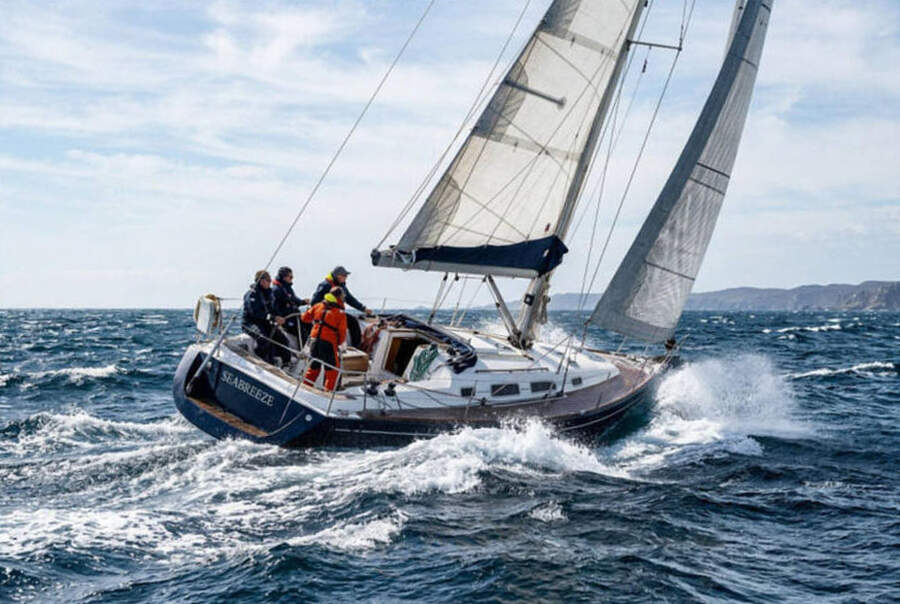
A boat carrying too much sail heels hard, rounds up into the wind and becomes a handful, which is slow, uncomfortable and unsafe.
Shortening sail early keeps the boat on its feet, keeps the helm light and, against what many expect, often keeps you sailing faster.
What reefing actually does
Reefing reduces the area of your sails so the wind has less to push against, cutting the heeling force without stopping the boat.
A common rule of thumb is a first reef around 15 knots, a second near 20 knots and a third once the wind holds above 25.
Each reef typically takes 20 to 25 per cent of the area out of the sail, so the power comes off in manageable steps.
The numbers are only a guide, because a heavy cruiser and a light dinghy will want to reef at very different points.
Read the boat, not just the wind gauge
Your boat tells you when it is overpowered long before you check an instrument, so learn to feel the signs.
Watch the heel angle, and when it creeps past 20 to 25 degrees and stays there, you are carrying too much sail.
Feel the helm, because a tiller or wheel that constantly pulls the bow into the wind is the clearest signal of all.
That building weather helm is the boat begging for a reef, and fighting it just wears you out and slows you down.
"If the thought reef crosses your mind, the decision is already made; the only mistake is talking yourself out of it."
Reef before you leave the dock
If the forecast is strong, the easiest reef of all is the one you put in at the mooring before you set off.
Sailing out already reefed is far simpler than wrestling sail down on a pitching deck once the wind is up.
You can always shake a reef out if the breeze stays soft, which takes seconds and costs you nothing.
Check the wind forecast before you go, and rig your reefing lines so everything runs clean and free.
How to put a reef in
Turn onto a close reach to take some load off the mainsail, and ease the mainsheet so the sail is not fully powered up.
Drop the halyard to the reef point, hook or secure the luff cringle at the tack, then winch the halyard tight again.
Next haul in the reefing line at the leech until the new foot of the sail is tight along the boom.
Tidy the loose sail with the reef ties if you have them, then trim on and settle back onto your course.
Do not forget the headsail
Balance matters, so reducing the mainsail alone can leave the boat unbalanced with too much headsail forward.
On a furling genoa, roll away a few turns to match the smaller main and keep the boat sailing evenly.
Aim to keep the centre of effort low and balanced, which is what keeps the helm light and the boat tracking straight.
A well-balanced rig under reduced sail will often point higher and feel calmer than a full rig fighting the gusts.
Fixing the usual mistakes
Reefing too late means doing the hardest job in the worst conditions, so make the call while it is still easy.
Only reefing the main leaves the boat unbalanced, so shorten the headsail to match and keep the helm neutral.
Sheeting the reefed sail too hard heels you over again, so ease off and let the flatter sail breathe.
Leaving it too long to shake out costs you speed in a dying breeze, so be ready to add sail back when it eases.
Staying safe when it builds
Clip on and wear a life jacket before you go forward, because the foredeck is the most dangerous place in a blow.
Tell the crew the plan before you start, so everyone knows their job and no one is caught out by a sudden round-up.
If conditions are beyond you, there is no shame in dropping sail and motoring home or staying in port.
Common questions
How do I know it is time to reef?
When the heel angle sits past 20 to 25 degrees, the helm loads up, or you simply start wondering whether to reef, it is time.
Should I reef the main or the headsail first?
Take the first bite out of whichever sail restores balance, but aim to shorten both so the boat stays even and the helm stays light.
Will reefing slow me down?
Usually the opposite, because a balanced boat that is not fighting its helm sails higher and often faster than one that is overpowered.
Can I reef single-handed?
Yes, if you set an autopilot or heave to first, rig your lines to lead back to the cockpit, and take it one step at a time.
Pick a day that suits your experience with the Seabreeze wind forecast , and swap heavy-weather tips with other sailors on the forums .