The Beaufort Scale: How We Learned to Rank Wind

In short
The Beaufort scale began in 1805 as one naval officer's shorthand for how much sail his ship could safely carry.
It grew from a private logbook habit into the world's common language for wind, still numbered 0 to 12 today.
What to watch
Once you know the story behind each number, forecast words like "gale" or "fresh breeze" stop being vague and start meaning something exact.
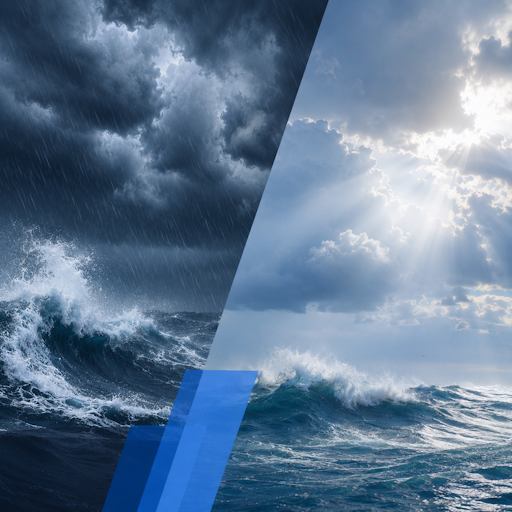
Every time a forecast says "fresh breeze" or "gale", it is quoting a system a Royal Navy officer sketched more than two centuries ago.
That officer was Francis Beaufort, born in Navan, County Meath, in 1774, and later Hydrographer of the Royal Navy.
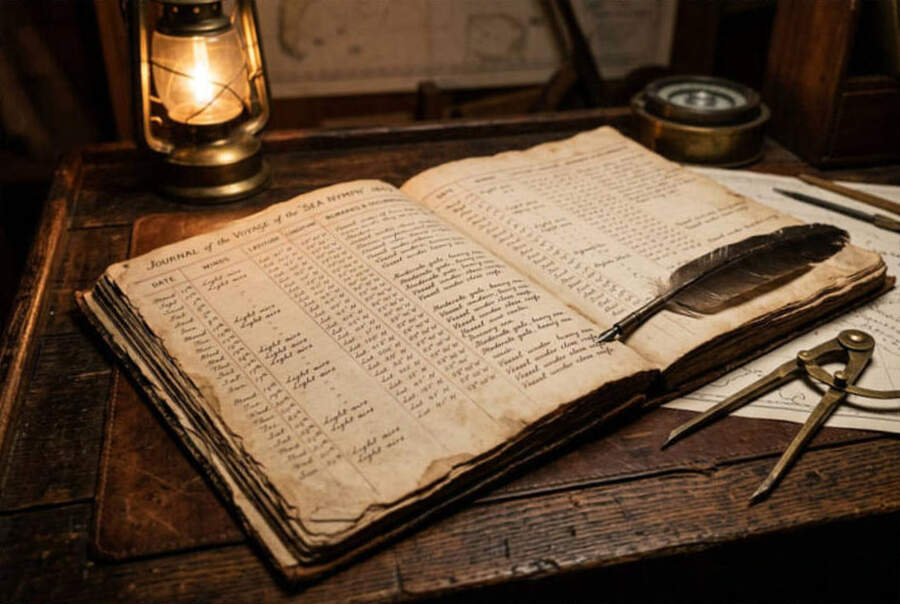
In 1805, while commanding HMS Woolwich, he wrote a private scale to keep his logbook consistent from one watch to the next.
A scale built around sails, not speed
Beaufort had no reliable way to measure wind speed at sea, so instead he measured the wind by what it did to his ship.
His numbers described how much canvas a full-rigged man-of-war could carry, from becalmed to bare poles in a storm.
Force 0 meant the sails hung dead against the mast; force 12 meant no canvas on earth could stand against it.
"Beaufort did not measure the wind - he measured what the wind did to a ship of the line."
Here is the scale in the form it settled into, alongside the sail-era logic that Beaufort first used to define each step.
| Force | Name | Wind (knots) | Beaufort's original sail definition |
|---|---|---|---|
| 0 | Calm | Under 1 | Sails hang limp; no steerage way |
| 1 | Light air | 1-3 | Just enough to give steerage way |
| 2 | Light breeze | 4-6 | All sail set, ship makes 1-2 knots |
| 3 | Gentle breeze | 7-10 | All sail, 3-4 knots |
| 4 | Moderate breeze | 11-16 | All plain sail, 5-6 knots |
| 5 | Fresh breeze | 17-21 | All plain sail, full and by |
| 6 | Strong breeze | 22-27 | Single-reefed topsails and top-gallants |
| 7 | Near gale | 28-33 | Double-reefed topsails |
| 8 | Gale | 34-40 | Triple-reefed topsails |
| 9 | Strong gale | 41-47 | Close-reefed topsails and courses |
| 10 | Storm | 48-55 | Barely bears a close-reefed main-topsail |
| 11 | Violent storm | 56-63 | Reduced to storm staysails |
| 12 | Hurricane | 64+ | No canvas can stand |
From a private habit to Admiralty law
For years the scale stayed personal, passed between officers who found it handy rather than ordered from above.
Its big break came through Robert FitzRoy, who adopted it aboard HMS Beagle during Charles Darwin's voyage from 1831.
The Admiralty made the scale standard for every Royal Navy log in 1838, turning one man's shorthand into fleet-wide practice.
Steam forced a rewrite
As steamships replaced sail, "how much canvas can she carry" stopped meaning anything to a vessel driven by engines.
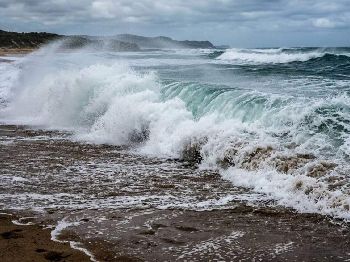
So the scale was redefined around the sea itself, matching each force to the size and behaviour of the waves.
In 1906 the meteorologist George Simpson added land descriptions, from drifting smoke to uprooted trees, so it worked ashore too.
Going global
Wind-speed equivalents in knots were fixed in the 1920s, giving each force a measured range at last.
The International Meteorological Committee standardised those figures in 1946, and the World Meteorological Organization still uses the 0-to-12 form.
Some nations stretched it to force 17 for typhoons, but the classic scale Beaufort would recognise still runs to 12.
Beaufort rose to Rear Admiral and spent 26 years charting the world's coasts, yet the scale carries his name further than any map he drew.
Common questions
Did Beaufort invent the idea from nothing? No, earlier writers such as Alexander Dalrymple suggested ranking wind by sail, but Beaufort turned the notion into a working system.
Why does the scale stop at 12? Twelve marked the point where no sail could stand, so beyond it the distinction no longer mattered to a sailing ship.
Is it still official today? Yes, marine forecasters worldwide still use it, including in Australian waters where "gale" and "storm" carry precise meanings.
Next time the forecast calls a "moderate breeze", you can plan your day around a number that has guided sailors since 1805.