Why the Beaufort Scale Still Beats the Gadget

In short
Anemometers, GPS and phone apps have not retired the Beaufort scale, and the reasons say a lot about good forecasting.
The scale still underpins the words in an Australian marine forecast, from strong wind warnings to storm force.
What to watch
Learn how each force maps to a warning and a raw number stops being abstract and starts meaning your afternoon on the water.
We can measure wind to a tenth of a knot from a phone, so why does a scale from 1805 still run the marine forecast?
Because a single number like "25 knots" tells you almost nothing until you have felt what 25 knots does to a boat.
The Beaufort scale answers the question a raw figure dodges: what will this wind actually do to me, my sails, and the sea?
It bundles wind and sea into one word
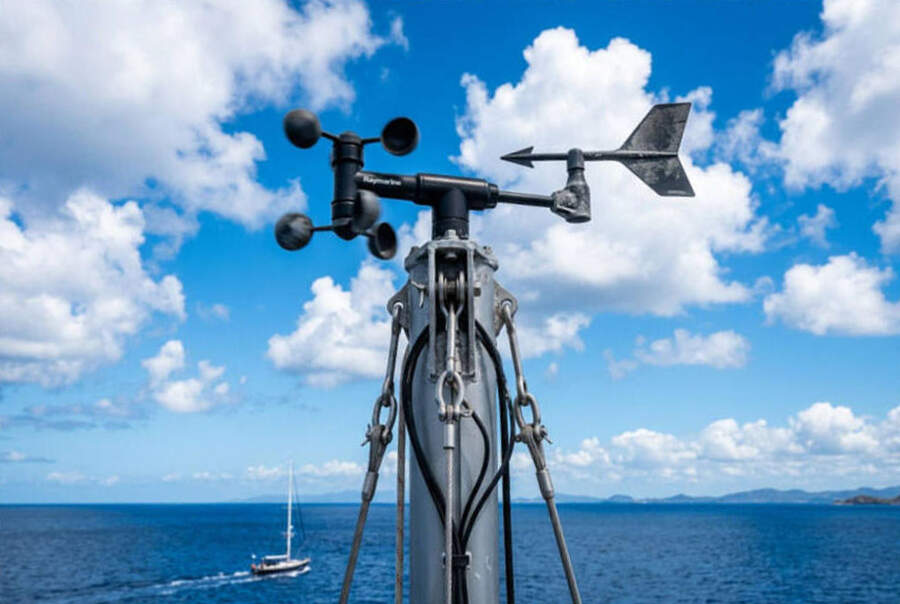
An anemometer gives you speed and nothing else, but a Beaufort force carries the sea state and the feel along with it.
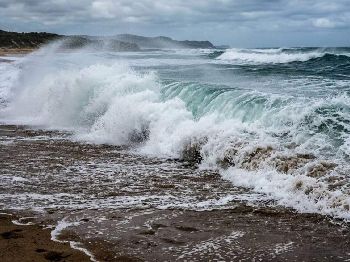
Say "force 6" to a sailor and they picture large waves, white crests everywhere and spray, not just a figure on a dial.
That bundle is why forecasters kept it, because it describes the experience of the wind rather than only its speed.
"A number tells you how fast the air is moving; a Beaufort force tells you what that wind is about to do to your day."
It is the language behind the warnings
Australia's marine forecasts are built on Beaufort thresholds, even when the word "Beaufort" never appears.
A strong wind warning, a gale warning and a storm force warning each line up with a band of the scale, as the table below shows.
| Force | Name | Wind (kn / km/h) | In the marine forecast |
|---|---|---|---|
| 0-1 | Calm to light air | 0-3 / 0-5 | Glassy, often too little to sail |
| 2-3 | Light to gentle breeze | 4-10 / 6-19 | Pleasant light-air sailing |
| 4-5 | Moderate to fresh breeze | 11-21 / 20-38 | Prime sailing breeze |
| 6 | Strong breeze | 22-27 / 39-49 | Approaching a strong wind warning |
| 7 | Near gale | 28-33 / 50-61 | Strong wind warning |
| 8-9 | Gale to strong gale | 34-47 / 62-88 | Gale warning |
| 10-11 | Storm to violent storm | 48-63 / 89-117 | Storm force warning |
| 12 | Hurricane | 64+ / 118+ | Hurricane force wind warning |
Read a forecast this way and the warning stops being a colour on a map and becomes a specific sea you can picture.
It is robust when the gadgets fail
Batteries die, masthead sensors ice up or foul, and a phone with no signal offshore is a useless brick.
The scale needs none of that, because your eyes and the sea surface are instruments that never run flat.
An experienced crew can lose every electronic aid on board and still name the force, set the right sail and get home safely.
It calibrates your own judgement
The scale's quiet gift is that it trains you to translate a forecast number into a felt reality before you leave the dock.
Once you have matched "20 knots" to the whitecaps and heel it produces, the next forecast plans itself in your head.
That is something no app delivers, because the calibration lives in you, not in the device you left on charge at home.
Common questions
Is the Beaufort scale outdated? No, it is still used in official marine forecasts worldwide precisely because it links measured wind to real conditions.
Do meteorologists still use it? Yes, forecast warning categories map directly onto Beaufort bands, so the scale is embedded in the language of every marine forecast.
Should I bother learning it with modern tech? Absolutely, because it turns a raw number into a plan and keeps working when your electronics do not.