Night Watch: Stay Useful After Dark

Quick summary
- Run two to three hour stints so the off watch gets real sleep instead of a string of naps.
- Prep in daylight: plot, lights, AIS, kettle, layers, and use the head before you go up.
- Hand over position, traffic, sail plan and next waypoint in about three minutes.
- Keep your eyes out and treat the instruments as a check, not as the job.
- Wake your relief ten minutes early with a real brief, not a shout down the hatch.
The how-to
A night watch is not a test of stamina, and the crew member who tries to prove otherwise is usually the one still awake and useless at 0400.
Fatigue is the accident, so the entire system exists to protect sleep: short stints, one person on deck, and handovers tight enough that nobody wastes time guessing.
Two to three hours is the common stint on a coastal hop, long enough to settle into the dark and short enough that you are still sharp at the end of it.
Prep: set up while you can still see
Plot before dark: fix your position on the chart, write the course to the next waypoint, and list the lights you expect to raise along the way.
Check the forecast one more time against what the sky is doing, because a coastal night off the Gold Coast can hand you a sea breeze collapse and then a land breeze from a new angle.
Load the forecast before you lose signal so the on watch knows what change to expect and roughly when.
Test the lights properly: walk forward and look at your own nav lights, then check the compass light, the instrument dimmer and the torch you keep in your pocket.
Set AIS and radar as alarms, not entertainment, with guard zones that suit the traffic you actually expect rather than a screen that beeps every four minutes.
Fill the kettle and the thermos so the on watch is never tempted to leave the deck unattended while a burner is lit in a rolling galley.
Dress for two hours of sitting still, because you lose heat fast on deck and a cold watch keeper stops scanning and starts hiding in the companionway.
Layers, a beanie, dry socks and a jacket you can move in are worth more than any electronics on the boat at three in the morning.
Use the head before you go up, since the alternative is either a distracted watch or a trip below at the worst possible moment.
Initiation: the handover is the watch
The watch is won in the handover, not in the staring, and three focused minutes beats a hero who quietly stays up all night.
Cover four things every time: where you are, what traffic is around, what the sail plan is, and what the next waypoint or light needs from you.
Position: point at the chart, say the distance and bearing to the next mark, and name the hazard you are avoiding, such as the shoals inside Moreton Bay.
Traffic: describe every target by bearing, rough range and what it is doing, including the fishing boat that has been sitting still for an hour.
Sail plan: state what is up, what is reefed, what the wind has been doing, and the exact conditions in which you want the skipper called.
Next event: tell your relief what will happen on their watch, whether that is a headland light coming up, a wind shift, or a gybe.
Give the next watch three clear minutes of information and you buy them two hours of good decisions.
Commitment: eyes out, not down
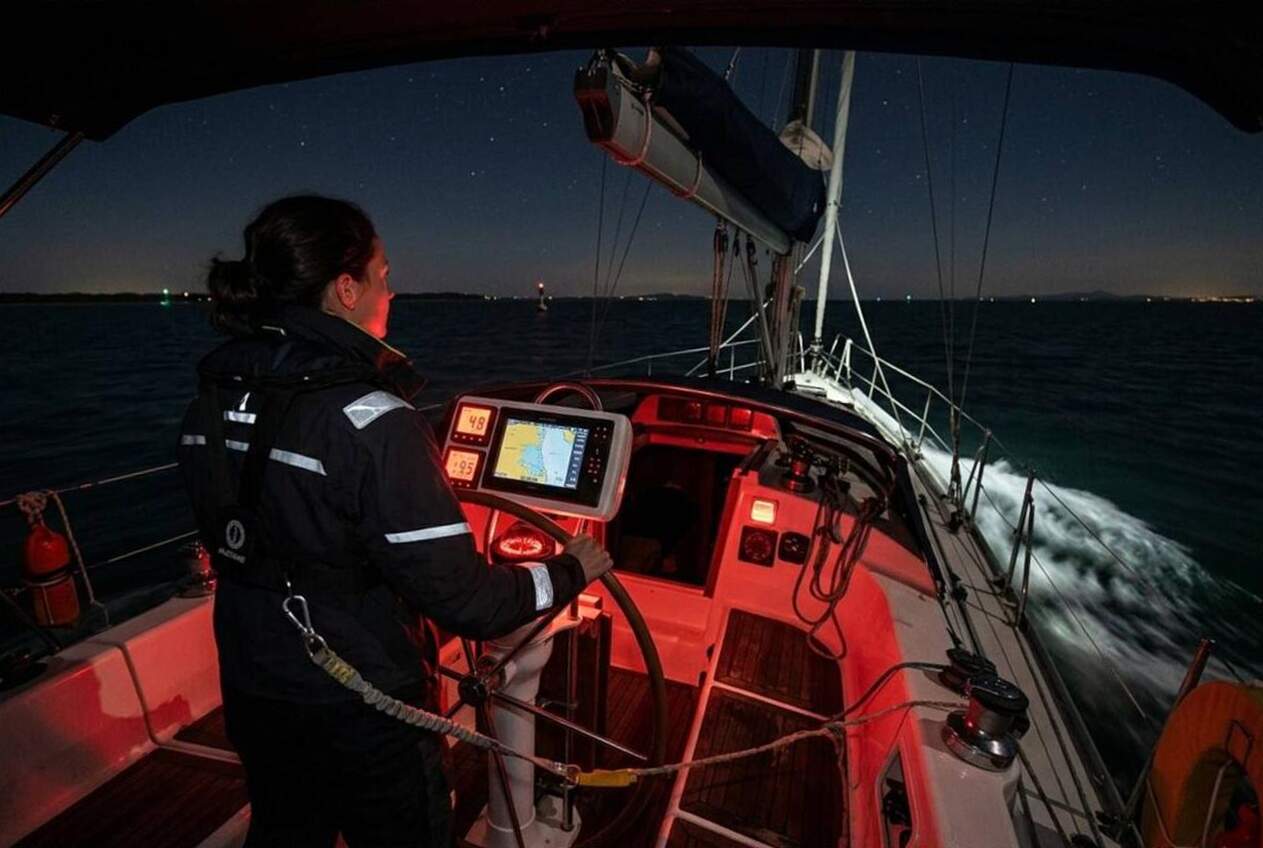
Once you have the deck, your job is the world outside the boat, and the plotter is there to confirm what your eyes have already told you.
Screens wreck your night vision and pull your head down for far longer than you think, so dim everything and use red light below decks.
Sitting in the companionway scrolling your phone is the classic failure, because the glow blinds you and the hatch blocks the view you were put there to keep.
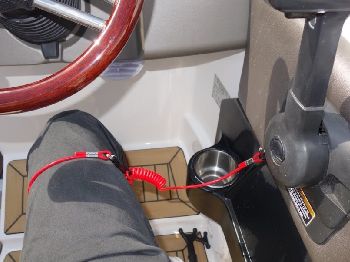
Clip on and wear your lifejacket after dark as a rule that never needs debating, and take a tether even if you only plan to sit in the cockpit.
If you leave the cockpit, tell the person below first, move on a handhold at all times, and clip to a jackline rather than the nearest fitting.
Execution: the slow scan
Build a rhythm you can repeat half asleep: a slow sweep of the horizon, a look at the sails, then a glance at the instruments.
Look slightly off to the side of a faint light to use your peripheral vision, and give your eyes a few seconds to settle before deciding it is nothing.
Take a compass bearing on anything you cannot identify, wait two minutes and take it again, since a bearing that will not change is a bearing you must act on.
Right feels like this: you have already named the tanker before the AIS makes a sound.
Wrong feels like this: the alarm goes off, you look up from the screen, and the ship is close enough to see the accommodation lights.
Keep a simple log each hour with position, course, wind and anything you saw, because it forces a full scan and gives the next watch continuity.
Call the skipper for real changes such as a reef, a course alteration or a close quarters situation, and never for trivia you could log instead.
Recovery: hand the boat over properly
Wake your relief ten minutes before their watch starts, by touch and by name, then let them find their layers and their eyes before they take the deck.
Brief them the way you wanted to be briefed, then stay in the cockpit for a minute or two while their night vision comes up.
Go below, drink some water, take your boots off and get horizontal, because your only job now is to be genuinely rested for your next stint.
Post your watch bill and passage plan on the Seabreeze forums and let sailors who have done that stretch of coast tell you what they would change.
How long should a night watch be?
Two to three hours is the standard, because it keeps you sharp on deck and still gives the off watch a usable block of sleep.
Do you need a lifejacket if you stay in the cockpit?
Yes, wear it after dark as a fixed rule, and carry a tether so clipping on is never a decision you make while things are going wrong.
When should you wake the skipper?
Wake them for anything involving a sail change, a course change, close traffic or plain doubt, and agree those triggers out loud before dark.
What keeps you awake on watch?
Movement, warmth, water and small tasks such as the hourly log entry, plus a stint short enough that you never have to fight sleep at all.